

Micah 5:2 offers insight into a story that intertwines history, prophecy, and geography. This verse, with its understated yet profound message, invites us to reflect on the significance of Bethlehem in the grand design of biblical prophecy. It shows how seemingly small places can hold great importance in the unfolding of divine plans.
Historical Context of Micah 5:2
Micah 5:2 highlights an unexpected place—Bethlehem Ephrathah, a small and seemingly insignificant town. Written between 735 and 710 B.C., Micah's prophecy spoke of monumental events from a humble stage. The prophecy was well-known, appearing in the Septuagint and respected by later prophets like Jeremiah.
Bethlehem Ephrathah, distinct from its Galilee counterpart, stands in Judaean soil about six miles from Jerusalem. While small, it carried the promise of a ruler destined for glory, born to fulfill God's plan. The Hebrew language speaks of "One" whose origins are ancient, even eternal. Christians identify this with Jesus Christ, the Messiah—an interpretation echoed in the Gospels.
Interestingly, pre-Christ rabbis often saw this scripture as pointing directly to a Messiah. Ancient Jewish writings like the Targum Jonathan align with this view. Even through historical shifts and reinterpretations, Bethlehem remains central to this eternal prophecy.
Through this single line of scripture, stretches the promise of a shepherd King sent not just to rule but to bring peace. Born in Bethlehem, wrapped in humility but anointed for greatness, Jesus stands as the fulfillment of a prophetic passage that invites believers and seekers alike to ponder and find promise.
Bethlehem Ephrathah: Geographic Significance
Bethlehem Ephrathah's geographic significance in biblical prophecy underscores the precise nature of divine selection. Unlike another Bethlehem located in Zebulon, this Bethlehem in Judaea stands out as the birthplace of both King David and the Messiah.
The name "Ephrathah" distinguishes it from the similarly named town in Galilee, signifying God's intention to highlight this precise location. Here, God chose to root both kings of past and the King of Kings, intertwining their destinies.
Bethlehem's historic ties to King David add profound layers to its significance. Before becoming king, David's humble beginnings in this quiet village set the stage for the Davidic line through which the Messiah was promised. This lineage wasn't birthed in power-plagued Jerusalem but in a town marked by simplicity and expectation.
Bethlehem Ephrathah becomes a physical and symbolic beacon, signifying a deliberate divine choice that upends human assumptions. It reminds us that God often finds richness in what the world might overlook, and that destiny can change course in unexpected settings.

Messianic Interpretation of Micah 5:2
The interpretation of Micah 5:2 as a Messianic prophecy has captivated scholars and believers for centuries. Ancient rabbis, long before Christ, recognized the profound implications of Micah's words. The Targum Jonathan, an Aramaic paraphrase, highlights Bethlehem as the birthplace of the Messiah, acknowledging a divine intention woven into history.
Early church fathers saw in Micah 5:2 the precise fulfillment of God's promise through Jesus Christ. Justin Martyr boldly identified this prophecy with Christ's nativity, affirming Bethlehem as the birthplace of salvation itself.
In the New Testament, both Matthew and Luke draw upon Micah's prophecy in their accounts of Jesus' birth. They recount the wise men's journey to Bethlehem, guided by a star—demonstrating how Bethlehem became the pivotal ground for divine intervention.
Modern rabbis offer differing perspectives on Micah 5:2, illustrating a dynamic discourse that spans centuries. While ancient scholars almost unanimously cast it as Messianic, today's interpretations sometimes diverge, balancing tradition and modernity.
The Messianic interpretation of Micah 5:2 transcends borders and eras, inviting all to marvel at a plan carefully crafted, reaching full bloom in the most humble of settings. It reminds us of the power and promise embodied in the birth of Christ—a story of hope eternal, written on hearts and echoed through the ages.
The Humble Origins of the Messiah
The selection of Bethlehem as the Messiah's birthplace presents a profound contrast between humble beginnings and divine mission. This choice aligns with a persistent biblical theme: God often employs the lowly and overlooked to fulfill His grand designs.
Bethlehem's modest stature serves as a poignant contrast to the grandeur of the Messiah's mission. This divine paradox challenges societal norms and invites us to reevaluate our metrics of significance. By selecting Bethlehem, God connected historical lineage with prophetic fulfillment, yet the Messiah's reign is celestial, ruling through love, peace, and redemption.
Jesus Christ, from His birth to His ministry, embodied humility and compassion. The magnitude of His mission—to reconcile humanity with God—was expressed through acts of healing, teaching love, and breaking barriers.
Bethlehem thus becomes more than a geographical footnote—it transforms into a symbol of hope and a testament to God's kingdom. It reminds us that true greatness is often born in humility, where God's design finds expression in the simple act of dwelling among us.
This message resonates across generations, reminding us that no matter how insignificant our beginnings may seem, they are woven into a design of eternal significance when aligned with God's purposes. Through the Messiah's birth in Bethlehem, we find a living account of God's grace manifesting in the world's quiet corners, transforming the ordinary into the extraordinary.
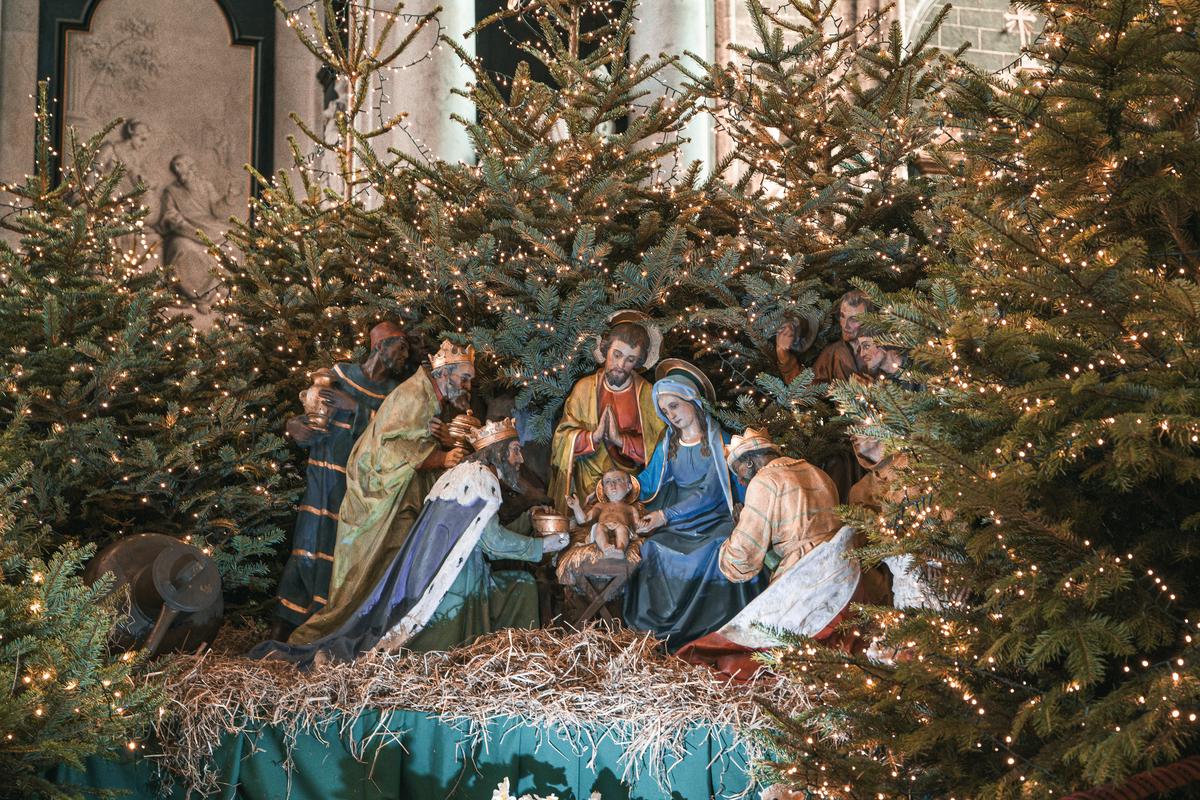
Photo by mustaphaturhan on Unsplash
Contemporary Relevance of Micah 5:2
Micah 5:2 continues to resonate today, connecting centuries of faith, prophecy, and divine promise. It affirms Jesus' identity as the Messiah, linking His heavenly mandate with His earthly origin in Bethlehem.
This verse serves as a crucial intersection in the journey of faith, offering both historical assurance of Jesus' Messianic credentials and a sense of divine continuity for contemporary believers. It stands as a beacon of divine foresight and precision, confirming that God's promises are woven with intent and care.
For Christians worldwide, Micah 5:2 provides assurance amid skepticism and doctrinal challenges. It offers an opportunity to reflect on the divine nature of Jesus Christ, not merely as a historical figure but as a fulfillment of ancient prophecies.
This prophecy encourages a dynamic engagement with scripture, fostering dialogue between ancient words and contemporary faith journeys. It reminds us that God's work often defies human conventions, revealing how even the humblest beginnings can herald monumental transformations.
In our digital age, Micah 5:2 provides a touchstone for believers seeking consistency and continuity. It invites contemplative exploration into the nature of God's promises and the world-shaping arrival of the Messiah.
Essentially, Micah 5:2 serves as a contemporary compass, guiding through the intricacies of faith with hope and sincerity. It challenges us to see the divine in the mundane and the eternal in the transient, reflecting a God who fulfills promises across generations.
Micah 5:2 stands as a testament to the enduring power of prophecy and its ability to transcend time. It reminds us that even the most modest beginnings can herald transformative change, urging us to see the extraordinary potential in what might seem ordinary. This verse continues to inspire hope and reflection, bridging past promises with present faith.
- Edersheim A. The Life and Times of Jesus the Messiah. New York: Longmans, Green; 1883.
- Santala R. The Messiah in the Old Testament in the Light of Rabbinical Writings. Jerusalem: Keren Ahvah Meshihit; 1992.
- Justin Martyr. First Apology. In: Roberts A, Donaldson J, eds. Ante-Nicene Fathers. Buffalo, NY: Christian Literature Publishing Co.; 1885.