

In times of upheaval, the role of guardians takes on profound significance. Michael's presence in Israel's story serves as a beacon of hope, promising deliverance amid chaos. Daniel 12 explores the interplay between spiritual warfare and divine promise, offering a message of resilience and faith that invites reflection on the eternal implications of our choices.
Michael's Role in Deliverance
Michael's role as a guardian is crucial during Israel's trying times. Daniel 12:1 depicts him as standing up, ready to shield and defend. In the spiritual battlefield, he's a commander, poised to combat forces that thrive in chaos. Michael serves as Israel's celestial watchman, vigilant and ready to rise at the sound of distress.
The text highlights Michael's readiness to stand, indicating action and leadership in tumultuous times. His presence underscores a key theme: deliverance. Michael is tasked with protecting those inscribed in the divine book, showcasing God's commitment to safeguarding His people even amid chaos.
Michael's relationship with Israel reflects ongoing spiritual warfare, spanning centuries and bridging heaven and earth. He remains a central figure in the battle against malevolent forces, embodying divine assurance that Israel will not face these trials alone. With Michael on the frontline, the scripture conveys that deliverance, though challenging, is guaranteed through vigilant defense amidst adversity.

The Time of Great Distress
The Great Tribulation, prophesied as an era of unparalleled distress for Israel and the world, marks a profound testing of faith and endurance. Daniel 12:1 speaks to a reality that echoes through centuries, resonating with times of severe trials in Israel's history. Yet, this future distress surpasses all former cataclysms, signifying a climactic convergence of adversities.
For Israel, this period is a crucible, purifying and testing. It reflects struggles endured from ancient persecutions through to modern turmoil. Despite the apparent chaos, deliverance is promised—a comprehensive deliverance that comes with its own challenges.
On the world stage, this distress affects all nations, highlighting that spiritual warfare and moral choices have far-reaching consequences. It calls into question the resilience and faith of humanity at large, illustrating that the trials faced by one are ultimately faced by all.
Even within this foreboding picture, there's an underlying optimism. It's the assurance that despite the darkness looming, light will break through. This propels believers to forge ahead, knowing that after the storm, the dawn of deliverance awaits. The Great Tribulation speaks not only of trials but also of resilience birthed from hope, affirming that victory is assured through divine purpose and promise.

Promise of Deliverance and Resurrection
Daniel 12 presents a promise of deliverance, a divine assurance for those whose names are inscribed in the celestial book. This promise transcends mundane rescues, touching upon the eternal. It signifies those known intimately by God, protected under His constant watch.
The passage also unveils a profound promise of resurrection, addressing humanity's age-old question about life after death. Daniel 12:2 offers hope wrapped in the reality of judgment, depicting some awakening to everlasting joy and others to perpetual disgrace. It underscores the eternal weight of our earthly choices.
Resurrection is presented in two forms, each with its eternal implications:
- For some, it heralds entrance into everlasting life—a transformation into timeless communion with God.
- For others, it means resurrection to everlasting contempt, a stark reminder that our choices carry consequences beyond our immediate sight.
These promises urge an intentional existence anchored in faith and consciousness of the eternal. The book of names serves as an invitation to partnership with the divine, challenging us to live in alignment with God's purpose. Ultimately, Daniel 12 offers a call against complacency, urging believers to nurture their relationship with God, ensuring their names are forever etched in His eternal ledger.

The Righteous Shining Like Stars
Daniel 12 presents a vivid image of the wise shining like stars. This metaphor depicts those who embody God's wisdom as beacons, illuminating the path for others with truth and clarity. Their influence extends beyond personal salvation, guiding lives toward eternal truth.
The act of turning many to righteousness is portrayed as a transformative journey with eternal implications. Daniel promises that this selfless endeavor will be rewarded with perpetual luminescence, reflecting both earthly dedication and divine favor.
This brilliance is described as eternal, underscoring a reward that transcends temporary accolades. The impact of these lives endures, echoing forever in the corridors of time. It assures the wise that their efforts bear fruit both immediately and throughout eternity.
"Those who are wise will shine like the brightness of the heavens, and those who lead many to righteousness, like the stars for ever and ever." – Daniel 12:3
Living a life that reflects God's light calls for a conscientious alignment of will and purpose. It invites believers to become vehicles of grace and truth, influencing generations through their steadfast commitment to His call. As we contemplate the stars above, we're reminded that each twinkle represents a life dedicated to the pursuit of righteousness—each flicker a testimony of faith and a challenge to embrace the transformative power entrusted to us.

Interpretations of Daniel 12:1-3
Daniel 12:1-3 has sparked various interpretations among scholars and theologians, each offering a unique perspective on the timing and nature of the resurrection described.
Many traditions view the resurrection in Daniel 12:2 as a literal event signaling the bodily resurrection at the end of history. This interpretation aligns with an evangelical understanding where all will be raised – some to eternal life, others to shame. It underscores a shared element found in many Judeo-Christian eschatologies.
Some theologians propose a symbolic approach, seeing the resurrection as metaphorical, representing Israel's spiritual revival during significant periods like the return from exile or the messianic era. This reading allows for a more immediate historical fulfillment while still permitting a comprehensive spiritual application.
Another perspective approaches Daniel 12:1-3 as an eschatological double entendre involving Israel's national restoration paralleled with Christ's resurrection. This view merges individual and collective resurrection motifs, emphasizing the unity of scripture and God's unfolding purpose through history.
These interpretations all engage deeply with the theological implications inherent in prophecy. Whether focusing on future bodily resurrection or embracing symbolic revival, they reflect an enduring engagement with Daniel's message. As readers seek to understand and apply these interpretations, they are invited to examine their faith, study Scripture, and glean insights that illuminate the eternal promises embedded within this ancient text.
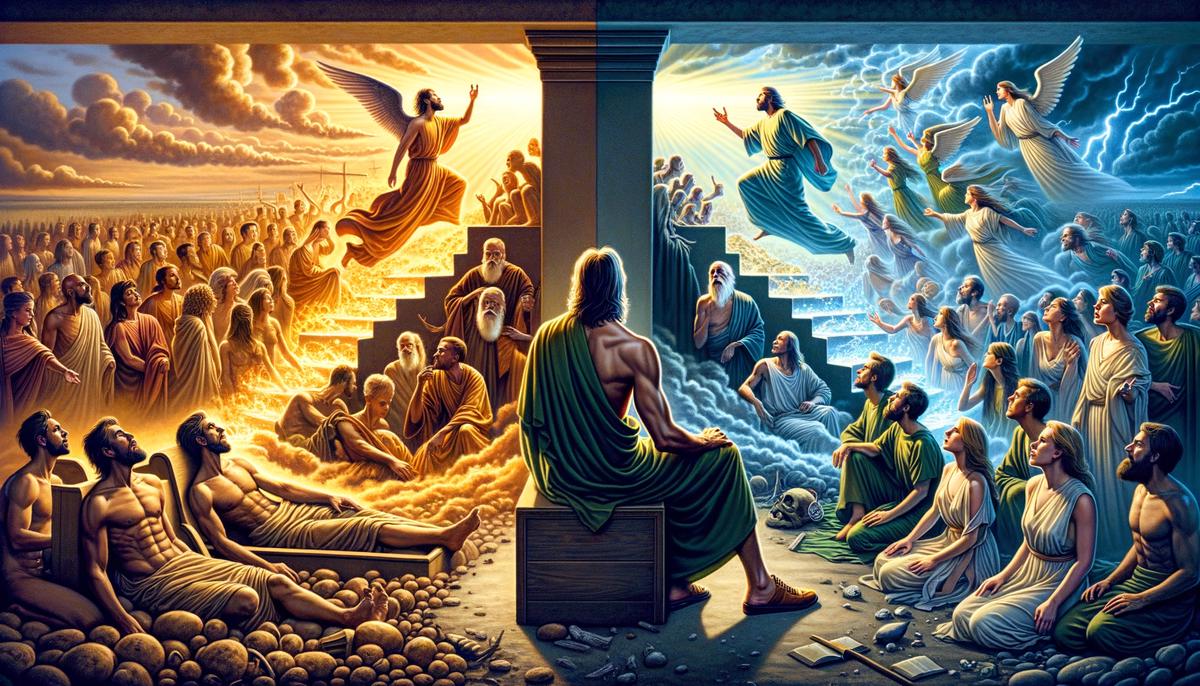
Daniel 12 offers a powerful promise of deliverance through divine purpose. This message reminds us that even in trials, there is a guiding light leading us to resurrection and everlasting life. It calls us to live with intention and faith, aligning our paths with eternal truths that promise hope and transformation.
- Miller S. Daniel. Nashville: Broadman & Holman Publishers; 1994.
- Walvoord JF. Daniel: The Key to Prophetic Revelation. Chicago: Moody Press; 1971.
- Jordan J. The Handwriting on the Wall: A Commentary on the Book of Daniel. Powder Springs, GA: American Vision; 2007.
- Wright NT. The Resurrection of the Son of God. Minneapolis: Fortress Press; 2003.
- Kayser P. The Last Days According to Jesus. Omaha: Biblical Blueprints; 2010.