

Understanding the Seventy Weeks
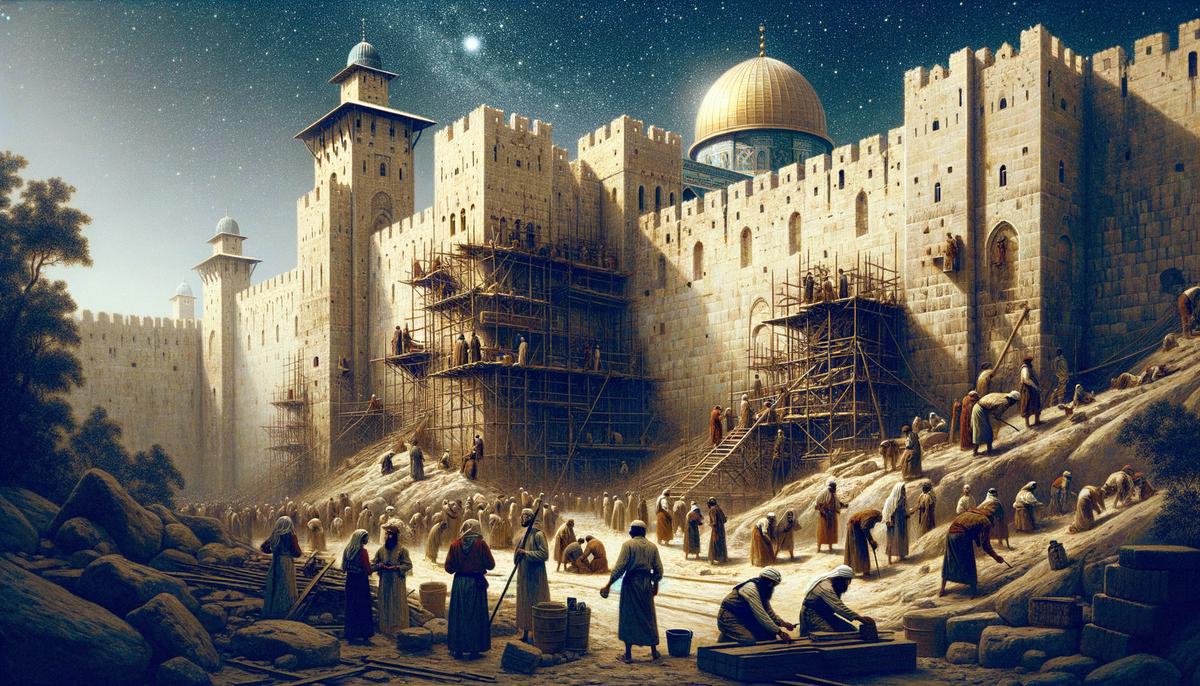
Daniel 9:24-27 presents the concept of the Seventy Weeks, a key messianic prophecy spanning 490 years. This timeline begins with a decree to rebuild Jerusalem in 444 B.C.E. and unfolds in segments:
- 7 'weeks' (49 years): Jerusalem's reconstruction
- 62 'weeks' (434 years): Leading to the Messiah's coming
- After 69 'weeks' (483 years): The "cutting off" of the Anointed One, often associated with Jesus' crucifixion around 30 C.E.
The prophecy also mentions Jerusalem's desolation, historically linked to 70 C.E. An unexplained gap exists between the 69th and 70th 'weeks.'
The final 'week' involves a covenant, its breach, and the cessation of sacrifices. This period is often interpreted as preceding the Messiah's ultimate restoration.
Gabriel's message outlines divine goals: ending transgression, atoning for sin, and bringing in everlasting righteousness. These verses serve as a spiritual guide through history, inviting contemplation on the precision of God's promises intersecting with earthly events.
The Prophetic Timeline
The decree to rebuild Jerusalem in 444 B.C.E. by Artaxerxes I marks the beginning of the Seventy Weeks. This timeline weaves historical milestones with divine promises:
- First 7 'weeks' (49 years): Jerusalem's restoration, symbolizing resilience and faithfulness.
- Next 62 'weeks' (434 years): A period of anticipation for the Messiah's arrival.
- The "cutting off" of the Anointed One: Often linked to Jesus' crucifixion around 30 C.E.
- Jerusalem's desolation in 70 C.E.
The interim between the 69th and 70th 'weeks' invites reflection on faith and unseen divine plans. The final 'week' describes a covenant, its breach, and ensuing turmoil, culminating in the promise of peace and righteousness.
This prophecy showcases the intricate connection between historical events and divine orchestration, offering a spiritual map that charts the course of prophetic fulfillment through the ages.
The Role of the Messiah
The Messiah is central to the Seventy Weeks prophecy, arriving 483 years after the decree to rebuild Jerusalem. This figure embodies both hope and fulfillment, initiating a new covenant of spiritual transformation.
The prophecy describes the Messiah's "cutting off," aligning with Jesus Christ's crucifixion around 30 C.E. This sacrificial act is seen as reconciling humanity with the divine, fulfilling Daniel's vision with remarkable accuracy.
The Messiah's role extends beyond sacrifice to victory over death, as reflected in the resurrection accounts. This triumph underscores the prophecy's essence: a shift from temporal suffering to eternal renewal.
Daniel's vision thus enhances our understanding of Jesus as both a historical figure and a spiritual revelation.
It invites contemplation on the interweaving of prophetic expectation with historical events, offering an enduring message of redemption and hope.

The Final Week and Eschatological Debates
The final 'week' of Daniel's prophecy sparks ongoing theological discussions, particularly regarding end-time events and the roles of key figures. This seven-year period is often viewed as the culmination of prophesied events leading to the establishment of everlasting righteousness.
Central to these debates is the interpretation of a global figure, often seen as the Antichrist, who plays a crucial role in end-time scenarios. The prophecy mentions a covenant at the start of this week, followed by its breach midway through, marked by the cessation of sacrifices and desecration of holy places.
The 'time gap' between the 69th and 70th weeks also fuels discussion. Some view this as a period for the Church's growth, while others see it as a time of anticipation for the Messiah's return.
Scholars debate whether to interpret this final week literally as future events or symbolically as spiritual archetypes. These varied perspectives reflect the challenge of balancing specific prophetic details with broader spiritual themes.
As believers engage with these profound mysteries, they're invited to consider how prophecy illuminates both past experiences and future expectations, deepening their participation in the ongoing story of redemption and divine justice.

Implications for Believers
For modern believers, Daniel's prophecy offers a vision of hope and assurance, bridging ancient wisdom with contemporary faith. It underscores God's sovereignty over world events, providing comfort amid life's uncertainties.
The prophecy challenges believers to look beyond earthly concerns, encouraging deeper spiritual discernment and reflection on one's place in God's plan. It fosters a dialogue among faith communities, promoting consideration of how divine foreknowledge relates to daily life.
This prophetic vision nurtures a resilient faith that celebrates both the known and unknown aspects of God's plan. It unites believers in anticipation of God's kingdom, characterized by peace, justice, and righteousness.
Ultimately, Daniel's prophecy serves as both a historical marker and a spiritual guide. It invites believers to trust in God's providence, engage more deeply with scripture, and actively participate in the unfolding story of redemption. This enduring message of hope anchors faith in the certainty of God's unchanging sovereignty.

At the heart of Daniel's prophecy lies a profound message of hope and divine orchestration. This timeless vision invites believers to embrace a future where faith and redemption intertwine, offering a steadfast assurance that transcends the uncertainties of life. In understanding this sacred account, we find not just a historical record but a living testament to the enduring promise of divine sovereignty.
- Fruchtenbaum AG. The Book of Daniel. Ariel Ministries; 2004.
- Miller SE. Daniel. New American Commentary. Broadman & Holman; 1994.
- Anderson R. The Coming Prince. Kregel Publications; 1957.