

John the Baptist as Elijah
In biblical interpretations, the question of John the Baptist playing the role of Elijah is significant. When John began baptizing people, he stated, "I am not Elijah" (John 1:21). Yet Jesus said, "He is Elijah who is to come" (Matthew 11:14). This apparent contradiction can be understood through closer examination.
The angel Gabriel told Zechariah about his son, John: he would go forth "in the spirit and power of Elijah" (Luke 1:17). This isn't about Elijah's literal reappearance, but rather a call to action embodying that prophetic spirit and mission. John, with his simple garb and powerful words, resembled Elijah standing firm against king Ahab. Their calls to repentance echoed similarly.
On the Mount of Transfiguration (Matthew 17:1–13), Elijah didn't discuss his past, but helped usher in the future, standing beside Moses and Jesus. Elijah's spirit—his boldness, his purpose—survived through John. The intensity with which both men preached mirrored the challenges of their times.
Ultimately, it isn't just about who John was, but what he represented: ushering in the Kingdom and calling for repentance. It's about change embodied, both personal and collective, about guiding humanity closer to divinity through the acts and spirits of those who came before.
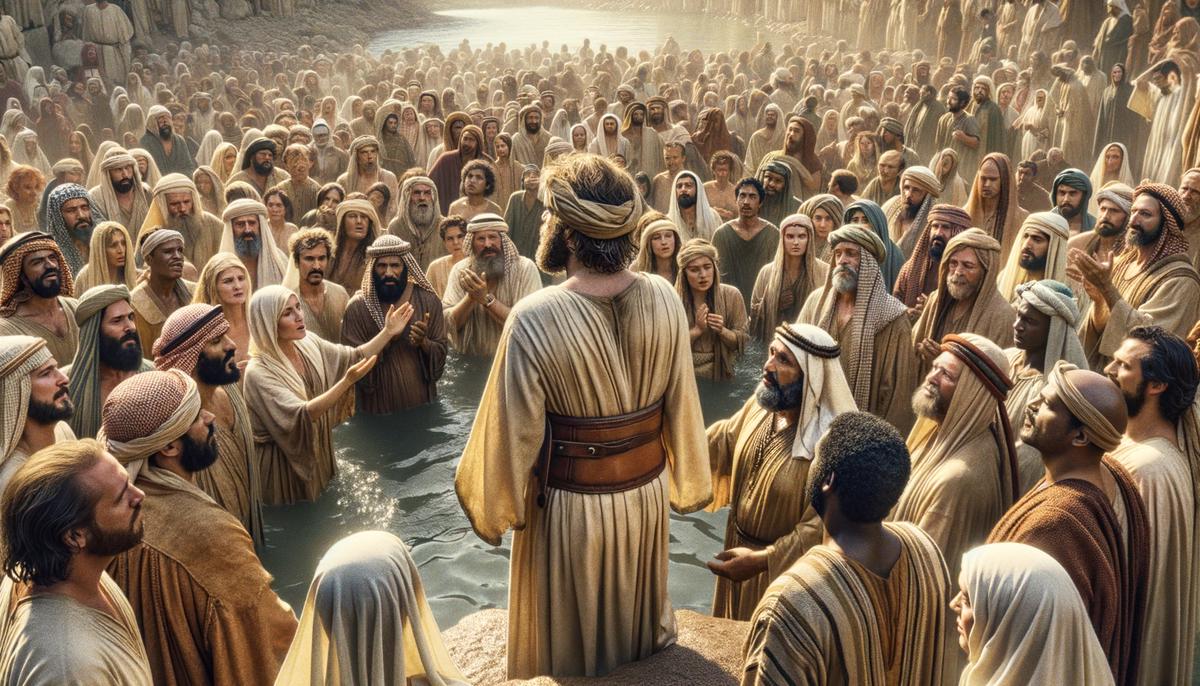
The Spirit and Power of Elijah
John the Baptist's life exemplified boldness and conviction, much like Elijah. Gabriel's words presented John as a vessel of Elijah's mighty spirit and purpose. In the Old Testament, Elijah was a beacon amid widespread waywardness. His rough garments contrasted the splendor of earthly powers he often confronted.
Similarly, John the Baptist emerged from the wilderness, humbly clothed, challenging the complacence of his time with fervent calls to repentance. Sustaining himself on locusts and wild honey, he embodied simplicity and focus—a focus fixed on divine truth.
John's sermons were uncompromising, reminiscent of Elijah calling out to the prophets of Baal. His words were a riveting blaze of honesty, shaking convenience and tradition. These two prophetic voices acted as spiritual weathervanes, indicating a shift, demanding urgency in turning from idle worship toward vibrant faith.
The parallel between them extends beyond appearance to the core of their ministries. Both prophets carried a divine message, essential to the people's return to God, and did so with undeniable ardor. Where Elijah stood before altars of idolatry and prompted fire from heaven, John called the ancient Jordan waters to witness new beginnings through baptism.
In heralding the Kingdom's approach, John embodied this power of spirit. His every action resonated with the promise of change, much like Elijah who wrestled hearts back to their Creator. Even as Jesus spoke highly of John, declaring him as the awaited Elijah, he invited followers to embrace a broader vision of God's plans.
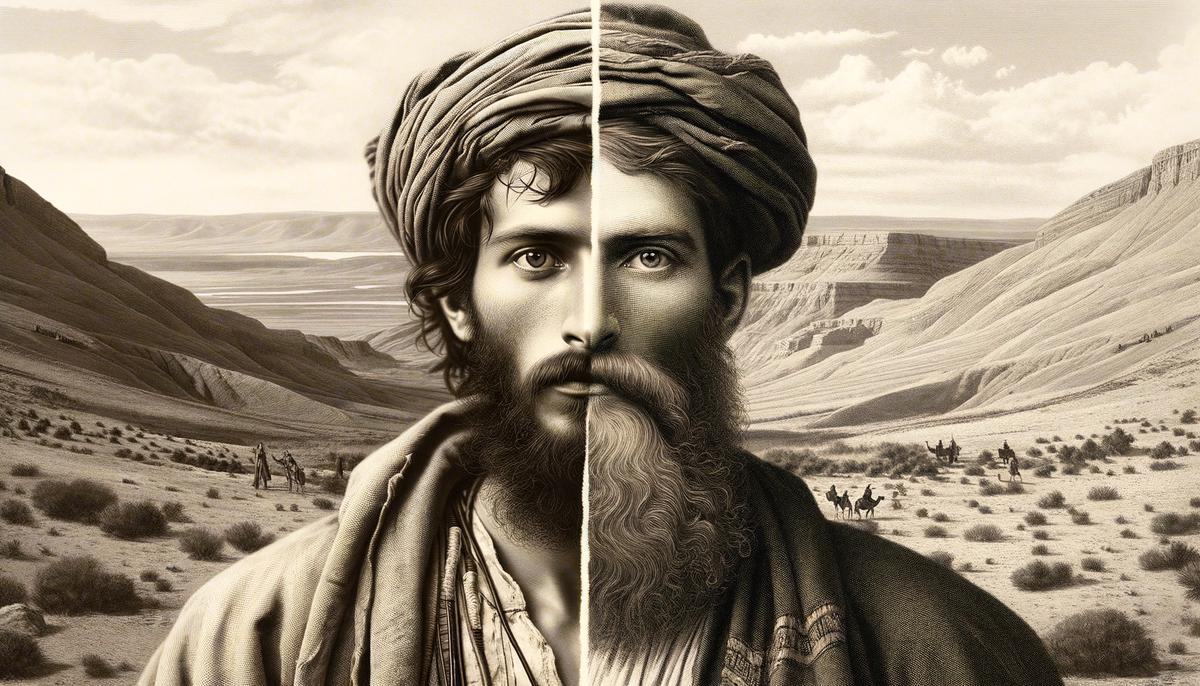
Restored Relationships
The prophecy of turning the hearts of fathers to their children illustrates tender reconnection that resonates across ages. This prophecy calls not only for mending familial ties but for communities and individuals to find their way back to unity and understanding.
"He will turn the hearts of fathers to their children, and the hearts of children to their fathers."
It's a vision that transcends mending family feuds and spans into the spiritual core of society. It challenges each of us to consider our roles in family, community, and faith.
This promise extends beyond biological relationships to the spiritual family, calling us to ensure that our relationships within faith communities are strong and resilient. It's a reminder that our collective path to divinity intertwines with how we relate to one another.
As hearts realign and relationships flourish, we move closer to being prepared for the Day of the Lord—where restoration and judgment converge. We're invited to participate in communal transformation, where reconciliation illuminates the path to divine encounter.
Jesus' teachings, which John heralded, urged us to strive for that ideal, for we find fulfillment in restored relationships with God and others. We are each called to play a part, like threads creating patterns that reflect divine love writ large.

The Day of the Lord
The Day of the Lord—a term echoing through Old and New Testaments—presents a blend of judgment and restoration, each linked with an overarching divine plan. Within these sacred texts, this day emerges not merely as a distant event but as an invitation to self-reflection, offering hope and new life.
Ancient prophets spoke of the Day of the Lord with gravity that ripples across millennia. In their words, nations were warned of cataclysmic reckonings. Yet, alongside these warnings, emerges hope—emphasizing salvation for those who turn towards righteousness. The promise was not of destruction alone, but of renewal for the penitent.
In the New Testament, the narrative transforms, encapsulating Jesus' life and mission as both fulfillment of these prophecies and a fresh dawn. His teachings enrich the dual nature of the Day of the Lord. He speaks of a kingdom defying temporal constraints, calling followers to embody its principles here and now.
For believers today, this symbolic day serves as both caution and comfort. It invites us to perceive life through a divine prism, aware of the gravity our choices hold in the present. The path to restoration—individually and collectively—is envisioned through repentance and faith, offering assurance amid tribulation.
Beneath the tension of judgment and renewal lies an essential truth: the Day of the Lord is about God's eternal presence among us as much as the definitive culmination of times. Every era echoes this profound theme—a calling to live aligned with justice, an assurance through divine revelation that our faith holds the promise of renewal.

In reflecting on biblical prophecy and its implications, John the Baptist's role as a harbinger of change remains profound. His embodiment of Elijah's spirit serves as a timeless reminder that faith is an evolving journey, urging us to embrace transformation and unity. As we ponder these connections, let us carry forward the essence of renewal and reconciliation, hopeful for a future where divine love guides our paths.
- The Holy Bible, New International Version. Zondervan, 2011.
- Duguid IM, Harmon M. Zephaniah, Haggai, Malachi. P&R Publishing, 2018.
- Mishnah Edduyot 8:7
- Mishnah Sotah 9:15