Historical Context of Amos 9:11-12
Amos 9:11-12 depicts God's promise to rebuild David's fallen tent, symbolizing the restoration of Israel's kingdom. This prophecy is significant for both ancient Jewish audiences and early Christians.
Amos, a sheep breeder from Tekoa, prophesied during a time of economic prosperity but spiritual decline in the northern kingdom of Israel. In the 8th century BCE, social injustice was widespread, with people living luxuriously while neglecting the poor and abandoning covenant values.
Amos predicts a severe shaking that would humble the nation but also lead to restoration. He assures that God plans to raise the ruins and rebuild David's legacy, conveying Israel's future restoration—a hopeful promise within a message of impending judgment.
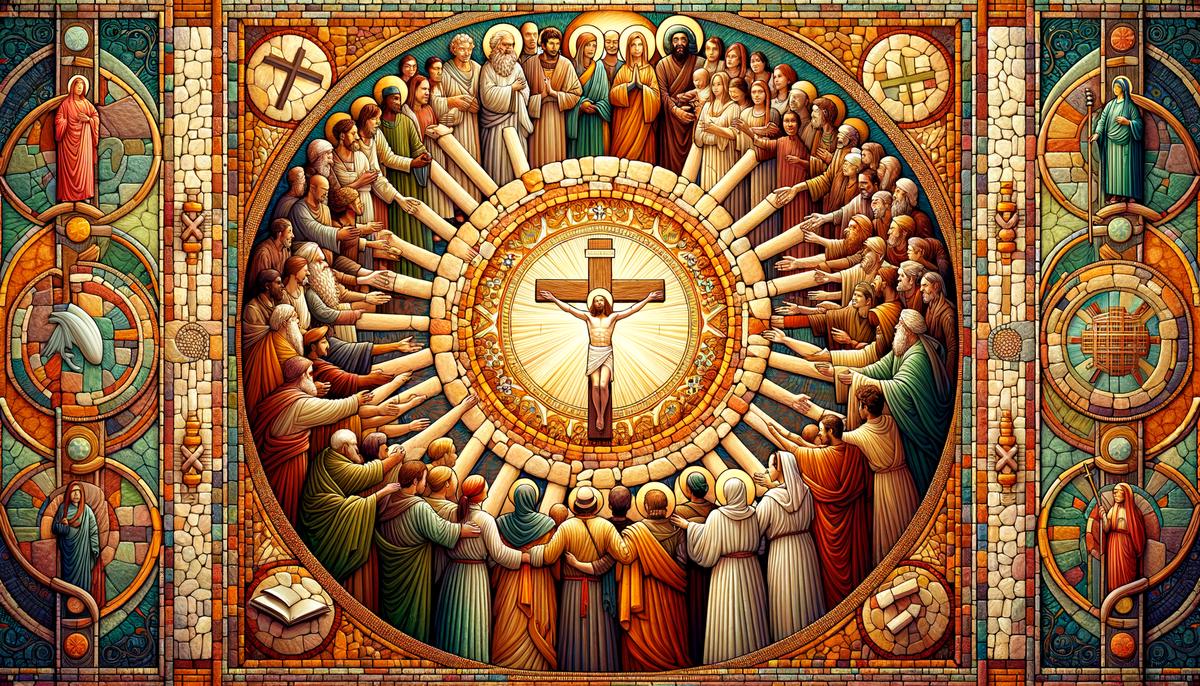
Amos introduces a surprising twist: "that they may possess the remnant of Edom and all the nations that bear my name," says the Lord. This extends the tent's reach beyond Israel to include Gentiles, typically viewed as outsiders.
In the New Testament, the early Church grapples with Gentile inclusion, especially during the Council at Jerusalem in Acts 15. James cites this text to argue that Gentile inclusion is part of God's long-term plan, not a new policy.
Amos's prophecy encourages believers to look beyond borders and see a kingdom built on justice and grace, reaching far and wide.

The Jerusalem Council's Decision
The Jerusalem Council in Acts 15 addressed the tension between innovation and tradition, shaping the young church's mission and defining Christianity itself.
The debate centered on admitting Gentiles into the Christian faith without requiring full adherence to Mosaic Law. Jewish Christians faced the challenge of welcoming outsiders while preserving their essence.
Peter recalled his transformative encounter with Cornelius, declaring that God made no distinction between Jew and Gentile, having purified their hearts by faith. James offered a compromise that bridged old and new, respecting both historic law and the Spirit's fresh movement.
The Council's groundbreaking decision set key terms:
- Gentiles needn't become Jewish proselytes
- Full observance of Mosaic Law not required
- Minimal abstentions for Gentiles:
- Food offered to idols
- Blood
- Things strangled
- Sexual immorality
This ruling physically and theologically transformed the church's vision, ensuring the gospel spread unhindered to new cultures and corners.
The Jerusalem Council exemplifies humility and innovation, showing that faith thrives when it boldly redefines itself through inclusion, not exclusion. This story of dialogue and determination reveals the true meaning of inclusion—building bridges across identities, not breaking them.

Peter and Paul's Roles in Gentile Inclusion
Peter and Paul, pillars of the early Church, championed Gentile inclusion—a move that reshaped Christian faith. Their efforts created a more inclusive community that transcended cultural and religious boundaries.
Peter's Pivotal Experience:
- Encounter with Cornelius, a Roman centurion
- Divine appointment starting with a puzzling vision
- Foreshadowed gospel's expansion beyond old limits
- At Jerusalem Council, reminded believers of God's impartial purification through faith alone
Paul's Transformation and Mission:
- Dramatic conversion on Damascus road
- From Saul the Pharisee to Paul the apostle to Gentiles
- Missionary journeys demonstrate unwavering commitment to Gentile inclusion
The dynamic between Peter and Paul reflected evolving Church leadership. Their collaboration marked a critical point where the Church sought not just growth but also wrestled with its identity as a people defined by faith and guided by the Spirit.
Despite different approaches and backgrounds, both apostles showed humility and openness to God's plan, crucial for the Church's expansion. They taught that faith leadership doesn't cling to the familiar but boldly enters new territories to fulfill divine promises.
Their legacy proves the power of harmony and collaboration in spreading the gospel, reminding us that the Church's strength lies in its diverse voices and unified purpose.

Conflict Resolution and Church Unity
The Jerusalem Council stands out in early Church history as a crucial moment of conflict resolution that maintained harmony and fueled Christian growth. This gathering addressed pressing doctrinal disputes, forging a path to unity.
The event centered on a debate about the relationship between Jewish customs and Jesus Christ's inclusive message. The young Church faced a critical question: How could it integrate Gentile believers while honoring its Jewish roots?
Key Elements of Successful Resolution:
- Earnest debate blended with spiritual discernment
- Leaders willing to listen and share personal testimonies
- Grounding discussion in rich heritage while guiding toward new horizons
- Deep awareness of the Spirit's movement
- Seeking divine guidance, not just human consensus
- Compromise maintaining respect for Jewish laws while embracing new believers' freedom
The Council's decree—a few abstentions for Gentile converts—preserved Jewish sensibilities without burdening the growing faith with unnecessary obstacles.
"It seemed good to the Holy Spirit and to us not to burden you with anything beyond the following requirements: You are to abstain from food sacrificed to idols, from blood, from the meat of strangled animals and from sexual immorality." – Acts 15:28-29
This consensus was communicated clearly and compassionately, recognizing that understanding fosters unity. By writing a letter to Gentile believers, Jewish leaders conveyed an instructive and encouraging message, ensuring the communication process was as inclusive as the decision itself.
The Jerusalem Council thus emerges as an example of effective conflict resolution, showing how different voices can unite to create a shared directive. It paved the way for a flourishing faith that spread a gospel of love and liberation across cultural and ethnic lines.
Today, the Jerusalem Council's lessons remain relevant. We find a model of unity that harmonizes individual identities in faith's symphony—a testament to the Church's enduring call to reflect God's boundless grace.
Theological Implications of Gentile Inclusion
The inclusion of Gentiles within the early Church marked a significant theological shift, affecting its core teachings, mission, and identity. This change fulfilled ancient prophecies and recalibrated the understanding of God's plan.
The inclusion highlighted the universal nature of God's redemptive story, tracing back to the promise made to Abraham that all nations would be blessed through him (Genesis 12:3). It expanded God's covenant beyond Israel, making salvation accessible to all humanity.
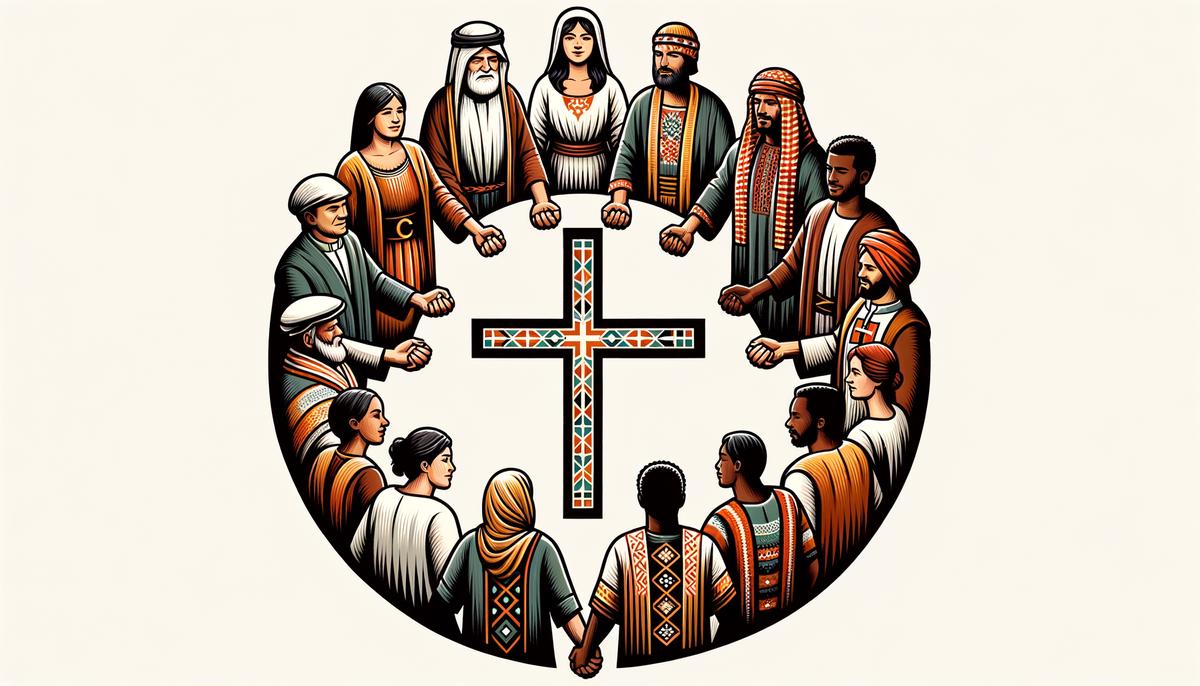
This progression prompted the Church to reconsider its identity, moving beyond ethnocentric roots. Identity became defined by shared faith in Jesus Christ, realized through the Holy Spirit. A new community emerged, rooted in Israel's legacy yet open to the world—a testament to unity in diversity.
In terms of mission, Gentile inclusion allowed the Church to fulfill Christ's commission to make disciples of all nations (Matthew 28:19). This required addressing cultural diversity while upholding the gospel's truth. The Church discovered that the essence of the gospel—love, redemption, and hope—transcended cultural barriers.
Theologically, this inclusiveness fulfilled Old Testament prophecies, such as Isaiah's vision of nations streaming to the Lord (Isaiah 2:2-4). It also provided a foretaste of the heavenly worship described in Revelation, where every tribe, language, people, and nation would gather (Revelation 7:9).
The inclusion brought a deeper awareness of grace's transformative nature. Faith in Christ became the unifying bond, emphasizing that righteousness comes through faith rather than ritual observance. This understanding of salvation distinguished Christianity through principles of grace, echoing Paul's doctrine of justification by faith.
Key Theological Implications:
- Fulfillment of Old Testament prophecies
- Expansion of God's covenant to all humanity
- Redefinition of religious identity based on faith
- Emphasis on unity in diversity
- Realization of Christ's universal mission

As we reflect on the early Church's journey, the inclusion of Gentiles exemplifies the expansive reach of faith. This pivotal moment reshaped community and identity, fulfilling ancient promises and setting a precedent for unity. Let's carry forward this spirit of inclusivity, recognizing that our faith's strength lies in its ability to welcome all.
"What was happening amongst the Christians was something new in the life of the church, in the life of the people of God, but it had also been prophesied: there would come a time when the Gentiles would be welcomed in to God's people."
The story of Gentile inclusion serves not merely as a historical account, but as a living model for the Church's ongoing mission. It challenges us to continually examine our practices and beliefs, ensuring they reflect the inclusive nature of God's love and the universal scope of Christ's sacrifice.
In conclusion, the theological implications of Gentile inclusion continue to shape Christian thought and practice. They remind us that God's plan of salvation is expansive, inclusive, and transformative, calling us to embrace diversity while maintaining unity in our shared faith in Christ.