
Isaiah's Vision of a Peaceable Kingdom
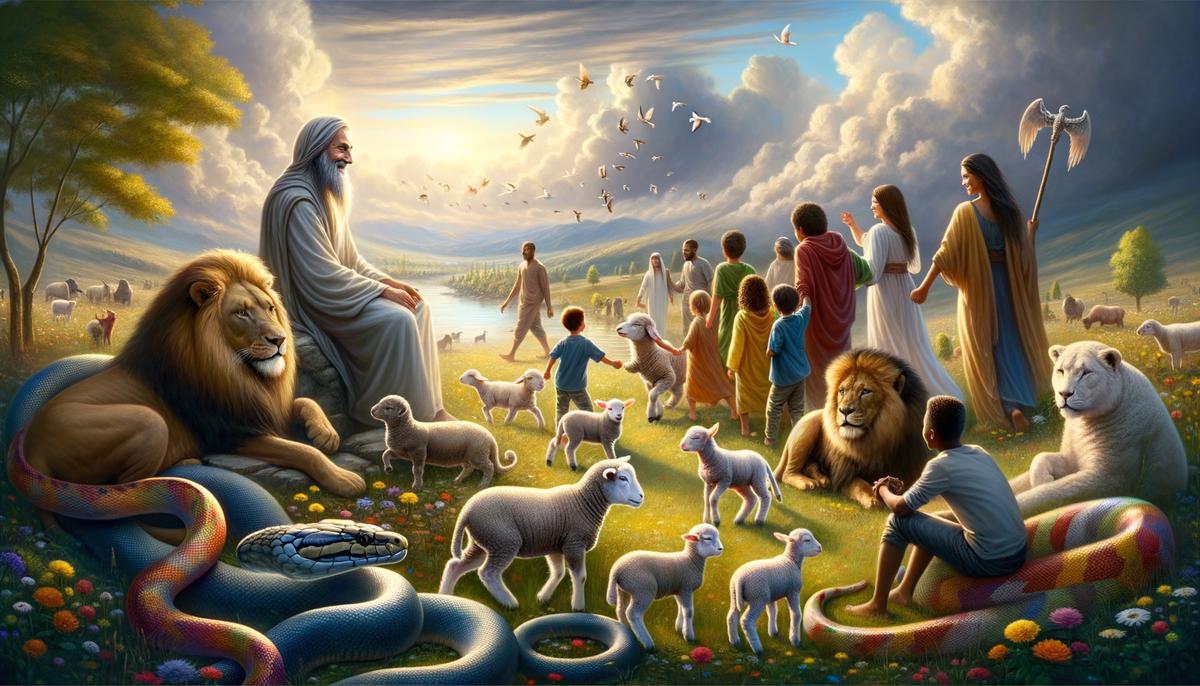
Isaiah's vision depicts a world transformed, where discord gives way to harmony. From the "stump of Jesse," a symbol of hope emerges – a leader filled with wisdom and strength, ready to bring about change. This messianic figure governs with justice and faithfulness, extending peace to all.
The prophecy extends beyond humanity, envisioning a natural world in perfect balance. Predators and prey coexist peacefully, reminiscent of Eden's untainted days. This imagery points to a future where creation is renewed, with ecological balance and mutual respect at its core.
While this vision paints an ideal, it's not an instant utopia. It represents an aspiration – a call for humanity to work towards balance and renewal, turning the ideal into reality through divine guidance and human effort.

The Role of the Messiah in Isaiah's Vision
The Messiah in Isaiah's prophecy is a transformative figure, arising from Jesse's lineage with exceptional wisdom and understanding. This leader judges with divine insight, embodying righteousness and bringing profound change.
Key qualities of this messianic figure include:
- Wisdom that pierces through ignorance
- Understanding that grasps the 'why' behind each choice
- A discerning spirit that gives voice to the voiceless
- Strength rooted in empathy and equity
- Fair judgment for the poor and defenseless
This leadership so profoundly shifts human consciousness that even nature responds, creating a ripple effect of peace. It's a vision that challenges us to recognize and strive for divinely inspired leadership, setting an example for a harmonious world where justice and peace reign supreme.

Environmental Renewal in Isaiah's Prophecy
Isaiah's vision extends beyond human relations to encompass environmental renewal. It portrays a world where nature itself is reborn, with predators and prey coexisting peacefully. This imagery isn't mere backdrop but a central aspect of the divine plan, highlighting the interconnectedness of all creation.
The prophecy serves as a reminder of our role as stewards of the Earth, calling us to heal and preserve our shared home. In an era of environmental crises, Isaiah's message resonates strongly, urging us to realign with the natural order and foster restored ecosystems.
This vision challenges us to embrace our role as guardians of creation, working towards a future where humanity and nature thrive in harmony. It's not just a dream, but a call to action – to lift our eyes to the vision and our hands to the task of building a renewed world.

Trauma and Hope in Isaiah's Context
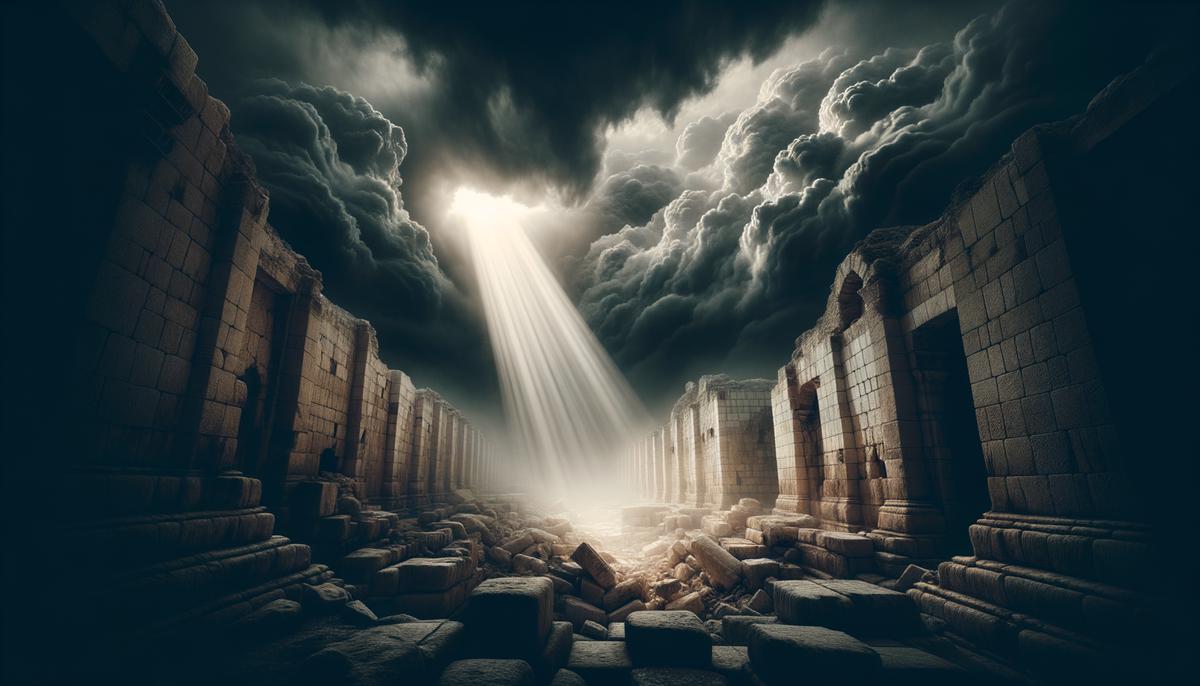
Isaiah's era was marked by war and oppression, with the Israelites living under constant threat from empires like Assyria. In this climate of fear and anticipatory trauma, Isaiah's prophecy emerged as a beacon of hope.
His message didn't deny the grim reality but used it as a backdrop to highlight the promise of a brighter future. Isaiah's words offered more than comfort; they presented a vision of profound transformation. This divine promise of a just and peaceful era, led by a divinely-inspired leader, served as a spiritual balm for the battered community.
The prophecy encouraged the Israelites to reframe their story, seeing themselves not as victims but as active participants in their restoration. It fostered resilience and post-traumatic growth, urging them to find meaning in their suffering and to rebuild with renewed purpose.
This timeless message continues to resonate, reminding us that even in times of distress, there's potential for growth and renewal. It challenges us to rise above adversity, foster resilient communities, and work towards a more peaceful world.
Post-Traumatic Growth and Religious Resilience
Isaiah's prophecy illuminates the interplay between faith and resilience in the face of trauma. For the ancient Israelites, faith was more than personal comfort; it was the anchor of their collective identity, offering a divine perspective that transformed fear into fortitude.
The role of religious faith in cultivating resilience was crucial. It allowed the community to reinterpret their turmoil as groundwork for a future rooted in justice and peace. Shared rituals, worship, and stories of divine deliverance wove a pattern of resilience, reminding them of their unity amid adversity.
Isaiah's vision encouraged a process similar to what we now call post-traumatic growth, where individuals find greater personal strength, deeper relationships, and renewed spiritual insight following hardship. It offered a divine narrative where suffering held meaning and purpose, potentially leading to transformation rather than destruction.
In the modern context, this message invites us to integrate faith into our healing journeys, using spiritual insights to guide us from despair to resilience. It reminds us that religious faith and communal support are vital in navigating and transcending trauma, offering not just solace but opportunities for profound growth and renewal.
Isaiah's vision challenges us to actively participate in shaping a world of harmony and peace. It reminds us that the path to a peaceable kingdom is paved with collective effort and unwavering hope, urging us to foster resilience and work towards transformation in our communities and world.
- Carr DM. Holy Resilience: The Bible's Traumatic Origins. Yale University Press; 2014.
- Herman JL. Trauma and Recovery: The Aftermath of Violence–From Domestic Abuse to Political Terror. Basic Books; 2015.
- Armstrong M, Carlson J. Speaking of Trauma: The Race Talk, the Gun Violence Talk, and the Racialization of Gun Trauma. Palgrave Communications. 2019;5(1):112.
- Hopwood TL, Schutte NS, Loi NM. Anticipatory Traumatic Reaction: Outcomes Arising From Secondary Exposure to Disasters and Large-Scale Threats. Assessment. 2019;26(8):1427-1443.
- Aster SZ. Isaiah's Vision of Peace in Biblical and Modern International Relations: Swords into Plowshares. Palgrave Macmillan; 2015.
- Tedeschi RG, Calhoun LG. Posttraumatic Growth: Conceptual Foundations and Empirical Evidence. Psychological Inquiry. 2004;15(1):1-18.