
Matthew 24:6-8 (NIV)
“You will hear of wars and rumors of wars, but see to it that you are not alarmed. Such things must happen, but the end is still to come. Nation will rise against nation, and kingdom against kingdom. There will be famines and earthquakes in various places. All these are the beginning of birth pains.” — Matthew 24:6-8
1. A quiet lookout on the Mount of Olives
Picture yourself standing where the disciples once stood, gazing west across the Kidron Valley toward the Temple. The city is bathed in late-afternoon light, but the questions in every heart are weighty: “What will be the sign of Your coming, and of the end of the age?” (Matthew 24:3). Yeshua (Jesus) answers with a sweeping panorama of global birth pains—conflict, scarcity, and convulsions in the natural order—yet He immediately anchors His followers in calm: “See to it that you are not alarmed.”

2. Reading the text in full
“You will hear of wars and rumors of wars… Nation will rise against nation, and kingdom against kingdom. There will be famines and earthquakes in various places. All these are the beginning of birth pains.” —Matthew 24:6-8
The imagery is simple, the implications vast. Like contractions that grow in frequency and intensity before a child is delivered, these labor pains herald the approaching birth of God’s kingdom on earth.
3. Historical lens: first-century echoes without final fulfillment
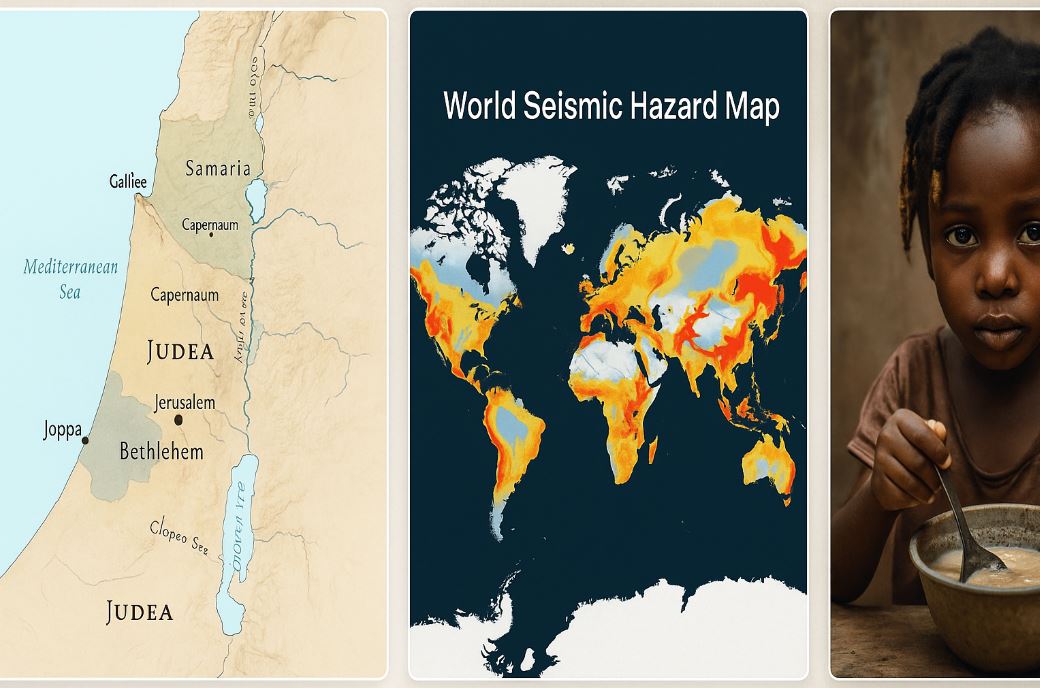
Yeshua spoke in roughly AD 30, when Judea simmered under Roman occupation. Within forty years Jerusalem would fall, yet the Messiah’s words outlived that catastrophe. He did not declare the destruction of the Temple to be “the end,” but rather one tremor among many until His visible return (Matthew 24:14). Early believers therefore learned to hold two truths together: God’s warnings can have initial fulfillments in history, yet a larger climax still awaits.
4. “Birth pains” across Scripture
The metaphor reaches back to Isaiah 13:6-8, forward to Jeremiah 30:6-7, and into the apostolic era where “the whole creation has been groaning as in the pains of childbirth” (Romans 8:22). Paul repeats it: “Destruction will come… as labor pains on a pregnant woman” (1 Thessalonians 5:3). Labor is purposeful: the agony is real, but new life lies on the other side.
5. Wars and rumors—external conflict and internal fear
The Greek polemos (war) and akoē (rumor, report) describe both active combat and the pervasive climate of anxiety it breeds. Today, analysts list more than a half-dozen major wars—Ukraine, Gaza-Israel-Lebanon, Sudan, Myanmar, the Sahel, and narco-violence in Mexico—plus dozens of lesser but deadly clashes crisisgroup.orgen.wikipedia.org. ACLED’s 2025 watch-list highlights Israel-Iran tensions, Myanmar’s civil war, and widening unrest in West Africa acleddata.com. These headlines illustrate—not exhaust—the prophecy.

6. Ethnos versus ethnos—fracturing along identity lines
Yeshua’s choice of ethnos (“nation,” “people-group”) warns that cultural, ethnic, and tribal fault lines will flare. From coups in the Sahel to sectarian violence in Manipur, India, the 21st-century record shows ethnic strife can ignite faster than state-to-state war. Believers are called to model reconciliation, remembering that in Messiah “there is neither Jew nor Greek… for you are all one” (Galatians 3:28).
7. Famines—scarcity amid plenty
The World Food Programme projects 343 million people in 74 nations will need life-saving assistance in 2025, with 1.9 million already “on the brink of famine” wfp.orgwfp.org. Recent WFP/FAO alerts single out Gaza, Sudan, South Sudan, Haiti, and Mali as highest-risk hotspots wfp.org. Scripture repeatedly links famine to both judgment and mercy—judgment when societies ignore the vulnerable (Ezekiel 16:49-50), mercy when God uses scarcity to turn hearts back to Him (Joel 2:12-14).
8. Earthquakes—planetary groaning
Geologists logged 2024 as Southern California’s most seismically active year since 1988, registering 13 quakes ≥ M 4.0 by mid-August alone cbsnews.com. A 2024 Colorado State University study even suggests climate-related glacier melt may increase fault slip rates, potentially triggering more tremors worldwide phys.org. From Turkey’s devastating Kahramanmaraş doublet (2023) to Japan’s Noto Peninsula quake (2024), the planet seems to shudder at shorter intervals—precisely what Yeshua’s labor-pains analogy anticipates.
9. Convergence: the four horsemen revisited
Revelation 6:3-8 portrays conflict, economic collapse, and death riding in tandem. Matthew 24 paints the same palette: red (war), black (famine), and pale (death by plague or quake). Yet we resist sensationalism. The signs are cumulative warnings, not precise countdowns. Yeshua’s refrain—“the end is still to come”—guards us against both panic and premature conclusions.
10. “See that you are not alarmed”—spiritual poise under pressure
Believers are commanded to refuse fear. “God is our refuge and strength, an ever-present help in trouble. Therefore we will not fear, though the earth give way…” (Psalm 46:1-3). The antidote to dread is trust in the character of the Father, learned in prayer and community before crisis strikes.
11. Watchfulness, not date-setting
Yeshua balances urgency with humility: “But about that day or hour no one knows” (Matthew 24:36). He urges vigilance—“Be always on the watch, and pray that you may be able to escape all that is about to happen” (Luke 21:36)—while forbidding speculative calendars. Faithful readiness is measured in steady obedience, not clever timelines.
12. Practical discipleship amid birth pains
- Cultivate resilient faith. Daily Scripture, worship, and fellowship are spiritual “core exercises” (Hebrews 10:24-25).
- Serve the suffering. Feeding the hungry embodies Messiah’s heart (Matthew 25:35).
- Pursue peace locally. Peacemaking in families and communities subverts the larger currents of hatred (Romans 12:18).
- Guard the mind. Limit rumor-driven media cycles; anchor your thoughts in whatever is true and praiseworthy (Philippians 4:8).
13. Word and place studies
| Term | Meaning | Insight for today |
|---|---|---|
| Yeshua | “Yah saves” | Every birth pain drives us back to the only Name by which we must be saved (Acts 4:12). |
| Mount of Olives (Har HaZeitim) | “Mount of oil/olive trees” | Olives supplied the oil that anointed kings and lamps; here Messiah was anointed for voluntary suffering (Matthew 26:30). |
| Judea (Yehudah) | “Praise” | Even in upheaval, God is raising a people of praise who trust His unfolding plan (Habakkuk 3:17-19). |
| Birth pains (ōdin) | Labor contractions | Pain has a timetable; joy follows (John 16:21). |
14. Modern parallels—signals, not certainties
Climate-linked earthquakes, AI-amplified propaganda (“rumors”), and supply-chain disruptions magnifying hunger all hint that global systems are more fragile than they appear. These patterns echo biblical prophecy without exhausting it. They summon believers to wise stewardship—of the planet, of truthful speech, and of resources meant to bless the needy.
15. Final encouragement
The same passage that warns of tumult also promises good news of the kingdom will be preached in the whole world (Matthew 24:14). Amid wars, poverty, and seismic jolts, God is orchestrating a harvest of souls. Let every tremor—political, economic, or geological—remind us to lift our gaze: “When these things begin to take place, stand up and lift up your heads, because your redemption is drawing near” (Luke 21:28).
May the Spirit grant you courage, discernment, and overflowing love as you navigate these birth pains and await the joyous arrival of the King.