
Understanding the Priest-King Imagery
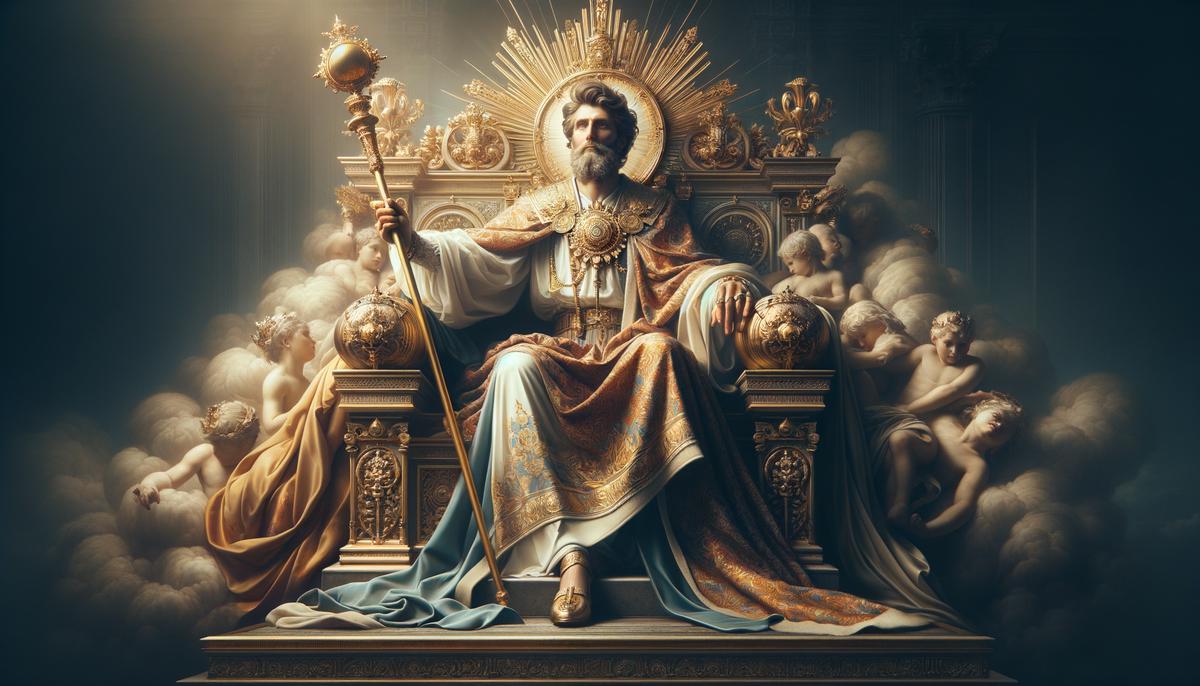
Psalm 110:1 presents a Messiah who combines the roles of king and priest. The phrase "Sit at My right hand" suggests authority akin to a ruler, while also hinting at a high priest's proximity to divine holiness.
Historically, Hebrews saw kings as earthly rulers and priests as intercessors with the divine. The merging of these roles in the Messiah is both innovative and revealing. It portrays a figure who commands nations while also opening paths to the Almighty.
This dual nature extends our understanding of divine leadership. The Messiah is both sovereign over the earth and a high priest interceding in heavenly realms. This position illustrates a reign that's both authoritative and redemptive.
In the New Testament, Jesus Christ embodies this priest-king paradigm, redefining leadership among his followers. His role at God's right hand imbues him with enduring authority and a perpetual priesthood surpassing any earthly reign.
This imagery invites us to see the Messiah as a leader who combines:
- Rule with empathy
- Conquest with grace
- A crown of humility
- A scepter of righteousness

New Testament Realization
The New Testament applies the priest-king imagery of Psalm 110:1 directly to Jesus Christ. This application is evident throughout the Gospels and Epistles, where Christ's life, death, and resurrection fulfill this dual role.
In Matthew 22:41-45, Jesus challenges the Pharisees' understanding of the Messiah, alluding to Psalm 110:1. This interaction reveals Jesus' claim to divine authority and identity as more than just David's earthly descendant.
Peter's sermon in Acts 2:32-36 explicitly cites Psalm 110:1, proclaiming Jesus as both Lord and Messiah. This declaration links Jesus' resurrection and ascension to the fulfillment of the priest-king prophecy.
The book of Hebrews develops this theme further, presenting Jesus as a priest in the order of Melchizedek (Psalm 110:4). It argues for an eternal priesthood based on divine appointment rather than genealogy, emphasizing Christ's ongoing intercession for believers.
Paul elaborates on this duality in his epistles. In Ephesians 1:20-23, he speaks of Christ's exaltation to God's right hand, echoing Psalm 110's assertions and connecting them to the church's mission.
These New Testament reflections deepen our understanding of the priest-king prophecy's fulfillment in Jesus. They present a sovereign who invites all into a relationship with God, balancing authority with compassion.
Messianic Prophecy and Fulfillment
Psalm 110:1 serves as a key Messianic prophecy, foreshadowing the divine nature and redemptive mission of the Messiah. Its fulfillment in Jesus' life and ministry connects ancient promises to their realization.
The psalm's imagery of the Messiah seated at God's right hand signifies unparalleled honor and authority. This prophecy goes beyond predicting exaltation; it affirms divine endorsement and cosmic rule.
Jesus' resurrection and ascension bring this prophecy to life, validating His claim as the Messiah. His victory over death affirms the psalm's declaration, marking a cosmic defeat of sin and spiritual adversaries.
The fulfillment of this prophecy in Jesus substantiates His identity as the promised king-priest. It demonstrates God's faithfulness throughout history and provides a foundation for the apostles' teachings on Christ's Messiahship.
This realization invites believers to witness the harmony of God's promises fulfilled in the Messiah. It offers assurance that our hope in Him is secure, as His reign continues to unfold in accordance with divine plan.

Theological Implications for Believers
The realization of Psalm 110's priest-king imagery in Jesus Christ holds significant implications for believers. It shapes our understanding of His authority and role in God's plan, presenting Him as both sovereign ruler and compassionate intercessor.
This dual role invites believers to trust in Christ's infinite power, exercised with mercy and love. It provides a foundation for confidence in His eternal governance, encouraging us to rest in His sovereign control.
In worship, this understanding directs our attention to the eternal King who not only commands respect but also invites intimacy. It fosters a deeply relational worship experience, as we engage with a Messiah who continually intercedes on our behalf.
Daily life is also influenced by this imagery. Recognizing Jesus' priestly role encourages believers to approach Him confidently, knowing He intercedes for us. It challenges us to reflect His righteous standards in our actions and decisions.
The integration of kingly authority and priestly empathy in Jesus serves as a model for Christian living. It calls us to balance strength with compassion, leadership with humility in our interactions with others.
Ultimately, this imagery enriches Christian theology by offering a holistic view of Jesus' authority and intercession. It infuses our worship with depth and our daily lives with purpose, calling us to reflect His kingdom's values of love, justice, and service.
Psalm 110 in the Context of the Psalms
Psalm 110 occupies a unique position within the Psalter, connecting various theological and messianic themes. Its placement and relationships with surrounding psalms underscore its importance in the overall message of the Book of Psalms.
As a royal and messianic psalm, it bridges the Davidic covenant's history and hopes with the future Messianic reign. Among diverse psalms of praise, lament, and wisdom, Psalm 110 stands out for its prophetic vision of the Messiah's divine and kingly nature.
The surrounding psalms create a thematic progression:
- Psalms 108 and 109: Set the stage with themes of faith, praise, and prayers for deliverance
- Psalm 110: Presents the assurance and triumph of the Messiah
- Psalms 111-113: Continue this theme, emphasizing divine attributes of justice, mercy, and faithfulness embodied by the Messiah
Through these connections, Psalm 110 enhances the Psalter's message of hope, divine justice, and the fulfillment of God's promises. It anticipates the ultimate victory over evil and invites readers to anchor their hope in God's redemptive plan.
The strategic placement of Psalm 110 assures believers of God's sovereign plan working through history. It offers confidence that God's covenantal promises are unwavering and that the reign and redemption brought forth through His chosen Messiah are certain.
As we reflect on Psalm 110's profound imagery, we see a Messiah who transcends traditional roles, embodying both kingly authority and priestly compassion. This vision of leadership challenges us to view authority through the lens of service and grace. It offers an enduring hope in divine leadership that promises justice, peace, and an eternal connection with God.
- Jordaan GJC, Nel P. From Priest-King to King-Priest: Psalm 110 and the Basic Structure of Hebrews. In: Human DJ, Steyn GJ, eds. Psalms and Hebrews: Studies in Reception. Library of Hebrew Bible/Old Testament Studies. T&T Clark; 2010.
- Karrer M. LXX Psalm 39:7-10 in Hebrews 10:5-7. In: Human DJ, Steyn GJ, eds. Psalms and Hebrews: Studies in Reception. Library of Hebrew Bible/Old Testament Studies. T&T Clark; 2010.