
Historical Context of Psalm 22
Psalm 22, written by King David, holds significance in Jewish tradition and Christian interpretations. This ancient poem, echoing a lament, weaves through history, linking two faiths. King David, the shepherd-turned-king, is revered for his psalms that blend personal struggles with profound spirituality.
The psalm emerges from a period when David faced immense troubles. It captures his anguish and isolation, yet also serves as a testament to unwavering hope in divine rescue. The verses detail an agonized plea for deliverance, with the cry "My God, my God, why have you forsaken me?" (Psalm 22:1) infused with a hopeful undertone anticipating divine intervention.
Through the ages, the interpretation of Psalm 22 has seen shifts:
- Jews historically saw it as a personal lament of David, symbolically representing the collective suffering and hope of Israel.
- As Christianity emerged, the psalm experienced a transformation in interpretation, with early Christians viewing these verses as prophetic, foreshadowing the suffering of Jesus.
Over centuries, debates have swirled around the precise wording of this psalm's Hebrew text, particularly regarding whether certain words speak of piercing or lion-like imagery. The Masoretic text and Dead Sea Scrolls show the intricacy of textual transmission, each variant hinting at different layers of meaning.

Textual Variations and Translation Challenges
Examining Psalm 22, the discussion of textual variations opens a dialogue between scholars, skeptics, and believers. The central challenge lies in whether the ancient script speaks of "pierced" or "like a lion" regarding the hands and feet of the speaker.
The Masoretic Text presents the phrasing "like a lion" (כָּאֲרִי, ka'ari), evoking powerful imagery around the sufferer's extremities. This aligns with the psalmist's use of animal metaphors to symbolize adversaries. The Septuagint, however, translates the phrase to "they have pierced" (καρφώσαντες, karphōsantes), which has echoed through Christian theology as a prelude to the crucifixion accounts.
The Dead Sea Scrolls offer another perspective, with one fragment appearing to support the "piercing" interpretation, though this reading still provokes rigorous debate among linguists.
These textual nuances shape discussions in both academic circles and religious communities, affecting doctrine and personal faith stories. They imbue Psalm 22 with a multilayered dynamism, serving as a reminder of unwavering faith amidst adversity and the enduring hope in divine intervention.
Prophetic Interpretations and Christian Perspectives
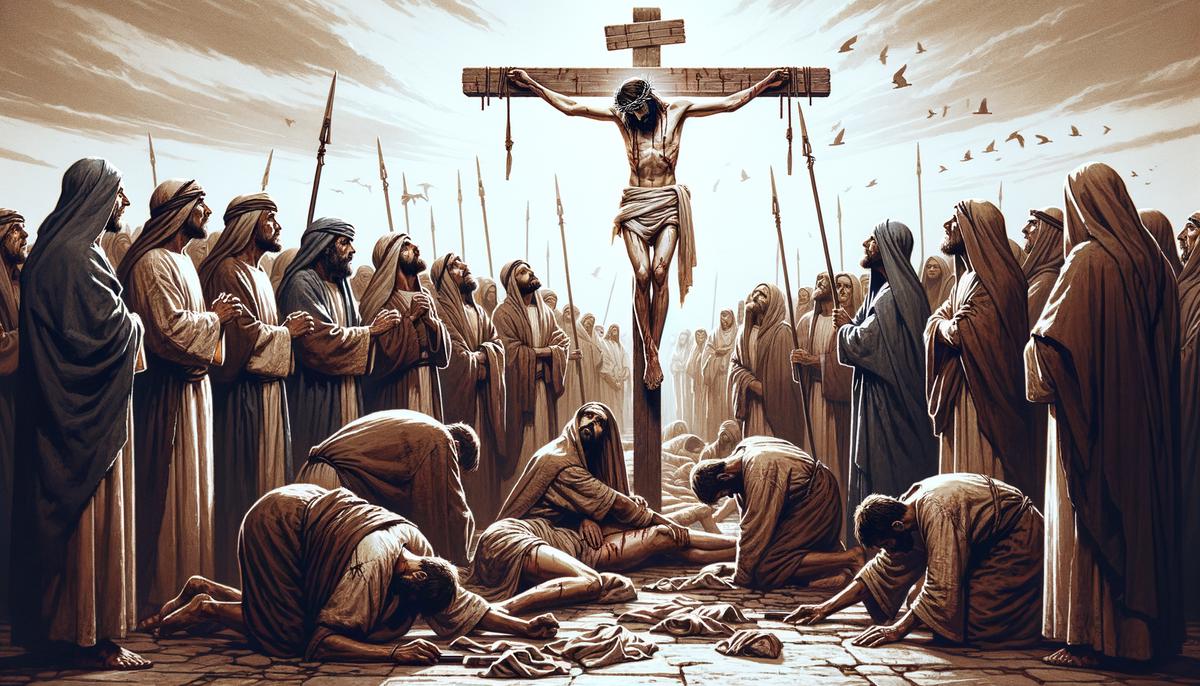
Christian interpretation views Psalm 22 as a prophetic vision that weaves the crucifixion of Jesus into biblical prophecy. The opening cry, "My God, my God, why have you forsaken me?" (Psalm 22:1), mirrored in the Gospels' accounts of Jesus' final moments, presents a connection between David's messianic anguish and Jesus' suffering.
Various elements within Psalm 22 are perceived as prophetic images of the crucifixion:
- The verse, "They divide my garments among them, and for my clothing they cast lots" (Psalm 22:18), aligns with Gospel accounts of Roman soldiers casting lots for Jesus' garments.
- The debated verse regarding "pierced" hands and feet resonates for many Christians as a prefiguration of the crucifixion.
These connections are seen as validation of Jesus' messianic mission and his role as the divine intercessor. The prophetic elements of Psalm 22 embody the story of redemption, where promises of hope and deliverance are fulfilled in the New Testament's portrayal of Jesus.
This interpretation enriches Christian theology and invites believers to explore how ancient scriptures foretell the life, death, and resurrection of Jesus, reinforcing a faith that looks both to prophetic promises and their fulfillment in Christ's legacy.
Jewish Interpretations and Counterarguments
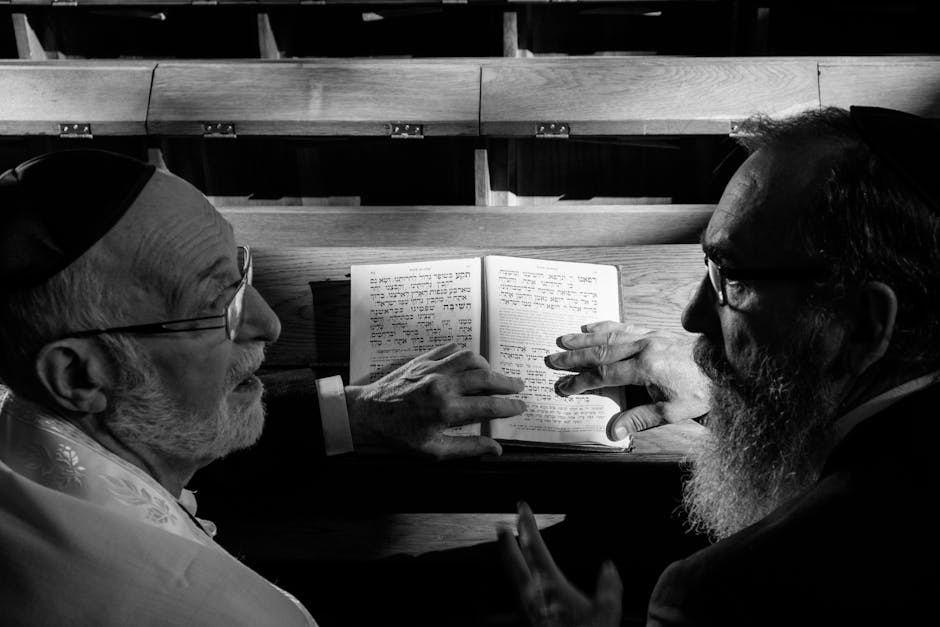
Jewish perspectives lend a historical and metaphorical context to Psalm 22, focusing on its immediate significance rather than prophetic implications. For Jewish scholars, it stands as an example of Davidic poetry, rich with evocative imagery and emotional depth.
David employs vivid animal metaphors, a hallmark of Hebrew poetic style, to illustrate his challenges. References to "bulls", "dogs", and "lions" serve as symbolic representations of his adversaries, amplifying the emotional intensity of his plight.
In this interpretation, Psalm 22 reflects the human condition—capturing the oscillation between anguish and hope for divine intervention. It is seen as a personal and immediate lament, centered on King David's plea for deliverance, resonating with the collective suffering of the Jewish people.
Jewish scholars offer counterarguments to Christian interpretations of Psalm 22 as a prophecy of Jesus' crucifixion:
- They point to the Masoretic Text's reading of "like a lion," suggesting that early Christian translators may have introduced later interpretations to align the text with Jesus' crucifixion account.
- The Jewish understanding emphasizes the consistent use of animal metaphors throughout the Psalms, supporting the view of the psalm as allegory rather than literal prophecy.
This interpretation adheres to the textual integrity and historical application of King David's words, providing an alternative perspective that enriches the understanding of this ancient hymn.
Impact of Translation Choices on Theology
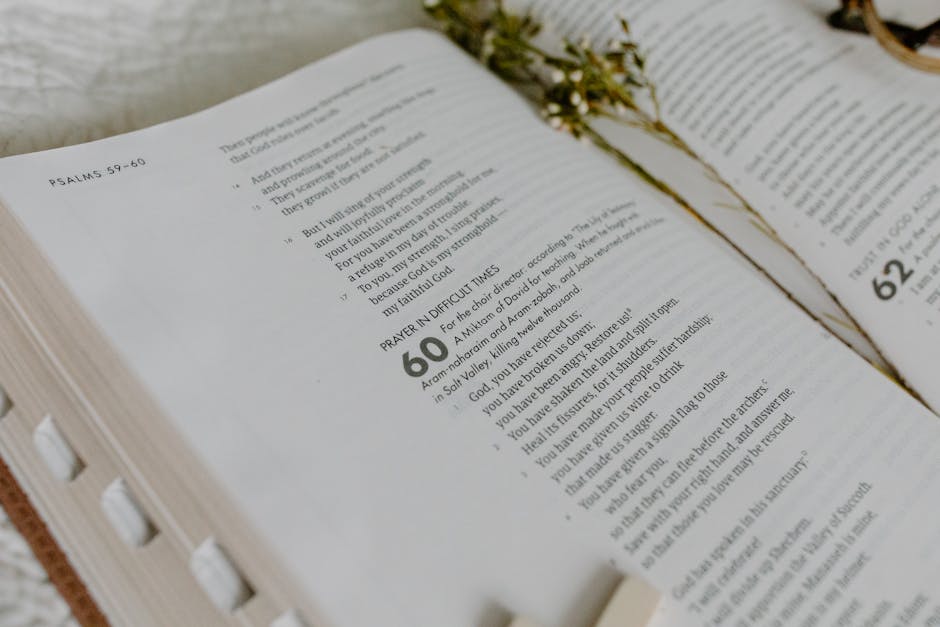
Translation choices surrounding Psalm 22:16-18 play a pivotal role in shaping theological beliefs across faith communities. These translations serve as interpretative lenses that can alter worldviews and shape religious doctrines.
The choice between interpreting the phrase in Psalm 22:16 as "they pierced my hands and my feet" versus "like a lion at my hands and feet" has significantly influenced how Jewish and Christian communities perceive the psalm's meaning and its theological implications.
| Translation | Interpretation |
|---|---|
| "They pierced" | Supports Christian view of messianic prophecy |
| "Like a lion" | Aligns with Jewish metaphorical understanding |
For Christians, the "pierced" translation underscores a connection to Jesus' crucifixion, affirming the belief that Jesus' sufferings were prefigured in the Old Testament. This interpretation has been foundational in solidifying Christ's role as the foretold suffering Messiah.
Jewish communities, adhering to the Masoretic Text's "like a lion" version, maintain the psalm's focus on King David's struggles, emphasizing its historical and metaphorical dimensions. This interpretation aligns with a broader Jewish theological framework that sees biblical prophecy more in terms of near-term events.
These translation choices affect everyday faith practices, sermons, and how scriptures are taught within each community. They shape cultural and religious identities, framing how adherents understand their relationship with God and sacred history.
The discussions surrounding these translations highlight the power of interpretation in shaping religious narratives. They invite reflection on the dynamic nature of divine texts and illustrate how sacred scriptures serve as living documents continuously engaged with by those seeking meaning within them.
Psalm 22 stands as a testament to the enduring power of faith, bridging diverse interpretations across time and tradition. Its ancient verses, whether seen as prophecy or personal lament, continue to resonate with those who seek understanding and hope in the face of adversity.
- Briggs C. The Book of Psalms. Edinburgh: T. & T. Clark; 1907.
- Josephus F. The Wars of the Jews. London: Penguin Books; 1959.
- Haas N. Anthropological observations on the skeletal remains from Giv'at ha-Mivtar. Israel Exploration Journal. 1970;20(1-2):38-59.
- Rosen M. Y'shua. Chicago: Moody Press; 1982.
- Flint P. The Dead Sea Scrolls Bible. New York: HarperOne; 2002.