
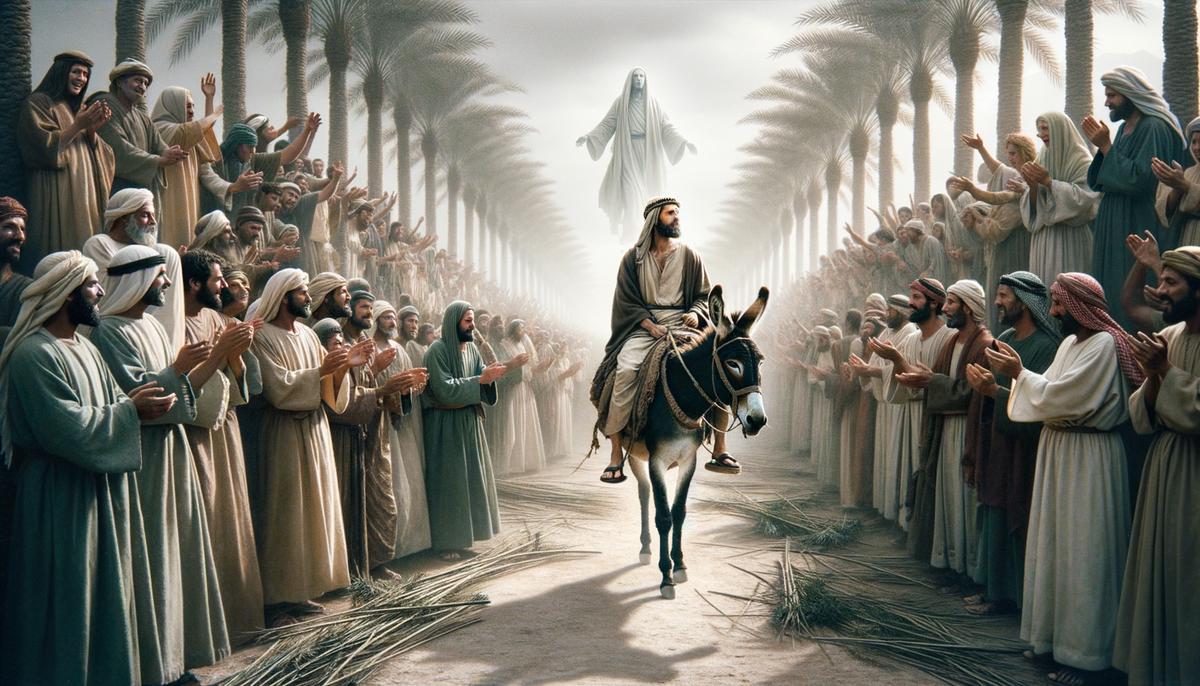
Historical Context of Zechariah 9:9-10
Zechariah's prophecy emerges from a time of upheaval in the 6th century BC. Alexander the Great's conquests had reshaped the political landscape, leaving a legacy of transformation and unrest. Amidst this backdrop, Zechariah presents a vision that contrasts sharply with the prevailing winds of war and dominion.
The prophet speaks of a humble king riding on a donkey, a stark departure from the expected image of a powerful ruler. This imagery challenges norms, proposing a kingdom characterized by righteousness and salvation rather than military might. For the Israelites, who longed for liberation from foreign rule, Zechariah's prophecy offers a different kind of triumph—one where justice is the cornerstone and humility the banner.
In an era marked by clashing empires and power struggles, Zechariah's vision of a peaceful king speaks to the deeper human longing for lasting change and stability. Unlike the temporary armistice of wars, this prophecy hints at an enduring promise of peace, championed by a king who rules not through forceful subjugation but through justice and righteousness.
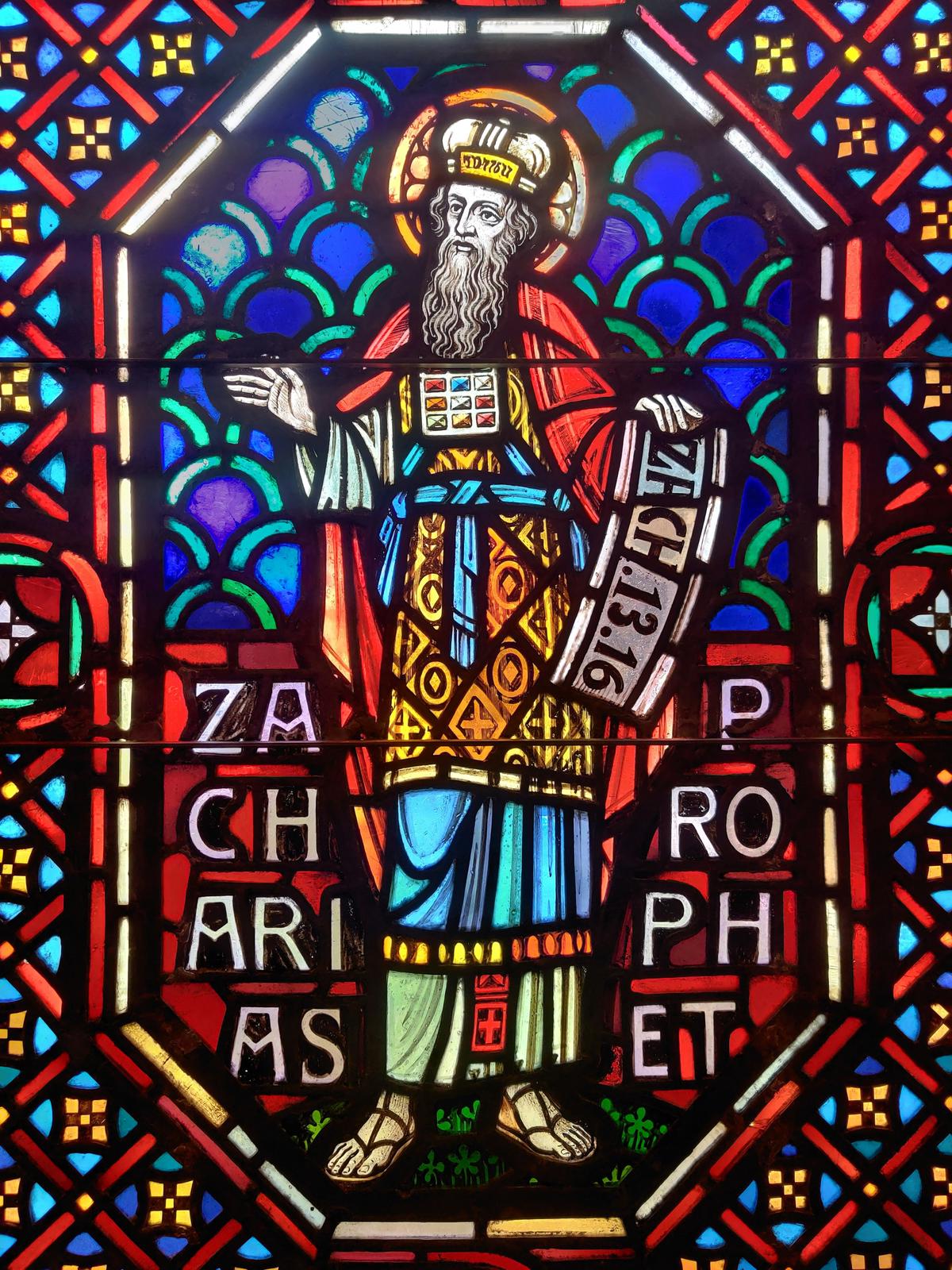
Photo by alvaromontoro on Unsplash
The Prophecy and Its Fulfillment
The prophecy of Zechariah 9:9-10 anticipates a humble king whose coming would redefine perceptions of power and authority. The image of this king riding on a donkey, an animal of labor rather than majesty, symbolizes humility and service. This juxtaposition underscores a profound kingdom ethos—a reign defined not by force but by peace.
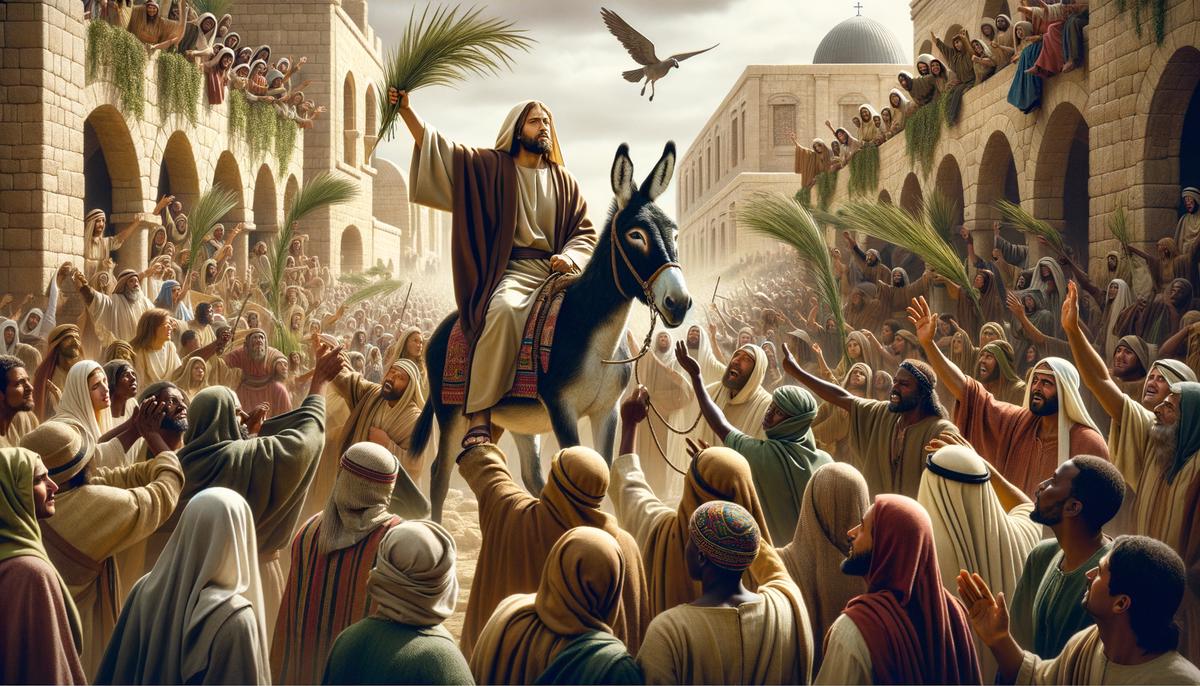
Jesus' triumphal entry into Jerusalem centuries later brought this prophecy into sharp focus. His choice to ride a donkey was a deliberate declaration of his mission and identity, embodying the essence of Zechariah's words. This act wasn't about seizing a throne through coercion but about inaugurating a kingdom steeped in compassion and servitude.
For those witnessing this event, it may have sparked a mix of confusion and hope. While many longed for a political savior to liberate them from Roman rule, Jesus' actions pointed to a deeper spiritual deliverance. This paradox of kingship foreshadowed his ultimate act of humility on the cross, where true victory would be achieved through sacrifice.
The implications of Jesus' actions continue to resonate, challenging us to adopt a perspective of humility and to understand what it means to live under the reign of such a king. It calls us to embrace a vision of greatness marked by service, grace, and a commitment to others' well-being.
Symbolism of the Donkey
The donkey in Zechariah's prophecy carries rich symbolism, particularly in its role as the "Covenant Donkey." In ancient covenant ceremonies, a special breed of donkey was often used to seal agreements, its presence symbolizing the seriousness and binding nature of the pact. This tradition adds depth to our understanding of the donkey's importance in Jesus' triumphal entry into Jerusalem.
By choosing to ride a donkey, Jesus engages in a symbolic act that echoes these age-old traditions of making and keeping promises. This imagery contrasts sharply with typical notions of power and might, where a horse or chariot might serve as symbols of authority. Instead, the donkey represents fidelity, commitment, and peace—cornerstones of a covenant relationship.
This symbolism enhances our understanding of Jesus' mission and kingship. His reign is established on promises of salvation, forgiveness, and eternal peace, rather than through conquest or force. The donkey becomes a vivid reminder that in God's kingdom, the paths of greatness are trodden in humility and enduring commitments.
Jesus' use of the "Covenant Donkey" redefines kingship, presenting a lens of service and heralding peace as the ultimate form of power. It challenges us to align our lives with the deeper realities of covenantal love and grace, serving as a testament to transformative leadership grounded in the fidelity of the heart and strength of spiritual promise.
Peacemaking Authority of the King
Zechariah's prophecy boldly proclaims a king whose authority diverges from the tumultuous power displays of his era. Instead of relying on military prowess, this ruler will usher in peace through justice—a concept revolutionary for its time. This portrayal captures the essence of divine authority as characterized by peace and righteousness.
Jesus exemplified this authority throughout his ministry. His actions, teachings, and sacrifice pointed to a kingdom where justice and mercy intersect—a place where brokenness finds healing and strife discovers tranquility. The forgiving nature of Christ wasn't a passive retreat from conflict, but an active engagement in righting wrongs through love.
For followers of Jesus, this portrayal of authority sets a profound standard. It's a call to align with a kingdom agenda that prioritizes peacemaking over power grabs. Believers are invited to replicate this paradigm, extending the same grace and reconciliation they have received. This isn't a passive calling; it requires active participation in becoming conduits of peace in their communities.
The implications of this peacemaking authority are vast. It urges believers to:
- Challenge societal norms that prioritize force over reconciliation
- Cultivate personal habits that embody justice and mercy
- Engage in acts of reconciliation within their spheres of influence
- Seek solutions that promote harmony rather than division
As we reflect on Zechariah's prophecy and its fulfillment in Christ, we are reminded that true power lies not in self-serving ambition but in self-giving love. Through this lens, peace is not merely the absence of conflict but the presence of divine justice, lived out by those who follow the humble king.

Impact on Spiritual Growth and Maturity
The prophecy of Zechariah invites believers to embark on a journey of spiritual growth and maturity under the reign of the humble king. This call to deepen one's spiritual life offers guidance that resonates profoundly in today's complex world, providing a roadmap for those seeking to lead lives of peace and harmony.
Living under the king's reign requires a transformation that begins in the heart. It challenges believers to cultivate the fruits of the Spirit—love, joy, peace, patience, kindness, goodness, faithfulness, gentleness, and self-control. This journey asks believers to prioritize inner renewal, recognizing that the stability they seek in their external world begins with the peace found within.
Applying this message means seeing daily interactions as opportunities for spiritual growth. Each moment holds potential to demonstrate Christ-like character, whether through:
- Extending forgiveness in the face of offense
- Offering a loving gesture to someone in need
- Choosing compassion when confronted with opposition
- Practicing patience in frustrating circumstances
The prophecy also encourages a community-oriented approach to spiritual maturity. Engaging with others on similar paths creates a supportive environment where collective growth and mutual encouragement flourish. It's a call to forge paths of reconciliation, to be peacemakers and bridge-builders in our personal spheres of influence.
Ultimately, this prophecy serves as a call for believers to reflect the transformative power of Jesus' reign in their lives. It urges us to recognize that true peace and maturity aren't found in the absence of life's challenges, but in our steadfastness and faith as we navigate them with God's wisdom as our guide. In living out the vision of this kingdom, believers discover that the call to spiritual growth is a joyous pursuit of harmony, opening avenues for deeper relationship with God.

As we reflect on the enduring message of Zechariah's prophecy, it becomes clear that the true essence of leadership and power lies in humility and peace. This vision challenges us to embrace a life marked by service and compassion, reminding us that the most profound victories are achieved not through force, but through love and justice.
- Zechariah 9:9-10, New International Version.
- Matthew 21:1-11; Mark 11:1-11; Luke 19:28-34; John 12:12-15.
- Acts 3:1-10; Acts 4:7-12.
- Hebrews 9:28.
- John 15:13.
- Colossians 1:19-20.
- Philippians 2:8.